After years in lighting exports, the question I hear almost as often as "what's the power?" or "how many lumens?" is about illuminance uniformity - a softer, less intuitive spec that trips up a lot of first-time buyers. So today I want to walk you through it using the lessons I've picked up from back-and-forth conversations with engineers and clients over the years.
What Is Illuminance Uniformity
Illuminance uniformity refers to the ratio between the darkest point on a road or site and the average illuminance (or the brightest point), and it's used to measure how evenly light is distributed across a lit area. When this metric falls short, the most obvious result is a visible pattern of alternating bright and dark patches on the road surface - what we in the trade often call the "zebra stripe" effect. Beyond being visually uncomfortable for drivers, this pattern also raises real safety concerns over time.
The most widely referenced international standards here come from CIE and IES road lighting guidelines. Main roads are generally required to maintain an overall uniformity ratio (Uo, the ratio of minimum to average illuminance) of no less than 0.4, with some higher-class roads also requiring a longitudinal uniformity (UL) above 0.4. Standards are somewhat more relaxed for pedestrian paths and residential streets, though the industry-accepted floor is still generally no lower than 0.25-0.3.
Why Uniformity Matters More Than Raw Illuminance Alone
Many buyers focus purely on whether the average illuminance number is high enough, overlooking the uniformity dimension entirely. From our experience across roadway LED lighting projects, a road with poor uniformity can still feel poorly lit to drivers even when the average illuminance technically meets spec - the human eye actually tires faster in alternating bright-dark conditions, and reaction time to spot obstacles slows down as a result.
Behind this lies a handful of key engineering variables: the fixture's light distribution curve, how well the installation spacing matches the mounting height, and the consistency of light decay across fixtures over time. If some units in a batch run brighter than others, or the beam angle design isn't properly calculated, the uniformity across an entire stretch of road simply won't hold up. This is exactly why professional lighting designers run simulations in software like DIALux before finalizing a layout, rather than guessing at spacing.
How We Ensure Uniformity from the Ground Up - Strict Quality Control LED Engineering Lighting
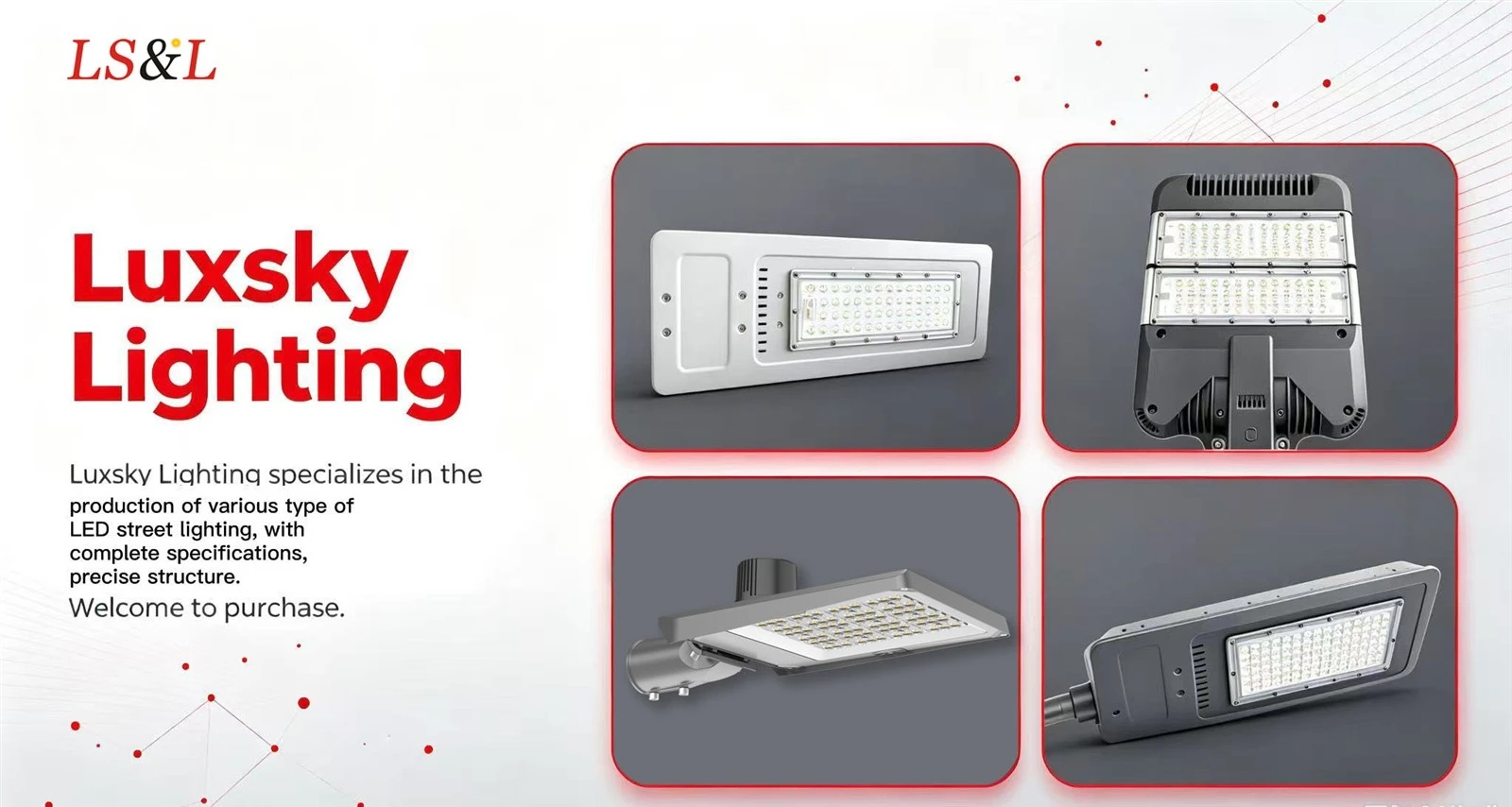
Honestly, uniformity is one of the toughest specs to nail, and it can't be achieved just by throwing a few high-lumen chips into a fixture - it comes down to real engineering capability and quality control. Our Strict quality control LED engineering lighting standard covers this at every step: precision design and prototype validation of optical lenses to ensure stable, predictable light distribution across every unit; consistency screening of incoming LED chips to avoid noticeable color temperature or luminous flux variation within the same batch; unit-by-unit photoelectric testing before shipment to keep actual output within a reasonable margin of the simulated data; and third-party test reports (CE, RoHS, ENEC, and others) so customers can independently verify real performance.
It's this system that lets us confidently present simulation data to clients, knowing the gap between the simulation and the actual installed result stays small - rather than one set of numbers on paper and a different reality on the ground.
A Few Tips When Selecting Fixtures
If you're sourcing LED street lights for a road, industrial park, or commercial site, it's worth sharing the project's road classification, mounting height, and pole spacing with your supplier upfront so their engineers can run a proper simulation, rather than simply copying parameters from another project. It's also worth prioritizing Smart outdoor light products with dimming capability, so if road conditions change down the line, you can fine-tune actual light output remotely through angle or power adjustment instead of replacing the entire batch of fixtures.
Conclusion
Illuminance uniformity may seem like a minor technical spec, but it directly determines both the lighting quality and the driving safety of a road. At Luxsky Lighting, we hold firm to our Strict quality control LED engineering lighting standard - from optical design through final testing - so that every roadway LED lighting product delivers results in the field that match what the simulation promised. If you're looking for an LED street light or Smart outdoor light solution with reliable uniformity and dependable quality, feel free to reach out to the Luxsky Lighting team. Our engineers will provide professional lighting design recommendations and a detailed quote based on your project parameters.