

With years of industrial‑lighting export experience, I find many overseas clients focus only on brightness, price and protection ratings, without knowing proper lux requirements for different work zones. Lux indicates whether factory lighting is functional and compliant. Insufficient lux reduces working accuracy and raises defect rates, while excessive lux wastes power and causes glare‑induced eye fatigue. Below are practical lux‑level guidelines and selection tips drawn from real‑world factory renovation projects.
1. Basic lux references for different workshop zones
Industrial sites have no universal lux value; standards depend on task complexity. Warehouses, aisles and storage areas require only basic lux for safe movement and simple sorting. General assembly and processing lines need steady medium‑level lux for long‑shift production. Precision‑processing, inspection and color‑matching workstations demand much higher lux performance.
2. Lighting solutions for ordinary workshop areas
For warehouses, aisles and rough‑processing zones, high‑output fixtures are unnecessary. Standard‑spec lighting delivers optimal cost‑efficiency. Featuring even and stable light output, the led tri proof light meets standard lux requirements for general workshops. With soft non‑glare illumination for long‑hour operation, it is a popular choice for basic factory lighting upgrades.
3. High‑lux configuration for precision‑focused work zones
Poor lighting in inspection, fine machining and electronic assembly positions easily triggers visual misjudgment and undetected product flaws. These areas require high lux, uniform light and minimal light decay. Dust, moisture and oil are common in such workshops. The well‑sealed ip65 led tri proof light offers robust protection and consistent lux output, sustaining qualified lighting for high‑accuracy production.
4. Lux requirements for factory outdoor areas
Loading docks, exterior aisles and open‑air equipment zones do not need indoor‑grade high lux. Basic visibility for night‑time operation, inspection and passage is sufficient. Built for changeable outdoor conditions, weatherproof lights deliver appropriate lux with strong wind‑rain resistance and anti‑aging performance, perfectly fitting factory exterior lighting demands.
5. Common mistakes in factory lux configuration
Many factories over‑spec brightness across all zones, leading to unnecessary energy consumption. Some cut costs with inadequate lux, hurting productivity and product quality. Ignoring light decay is another frequent pitfall. New fixtures may hit target lux, yet brightness drops over time without timely replacement.
Factory lighting should be zoned and task‑oriented. Avoid chasing maximum brightness blindly, and do not under‑spec to save costs. Matching fixtures according to warehousing, assembly lines, precision stations and outdoor zones balances production safety, product quality and overall operational expenses.
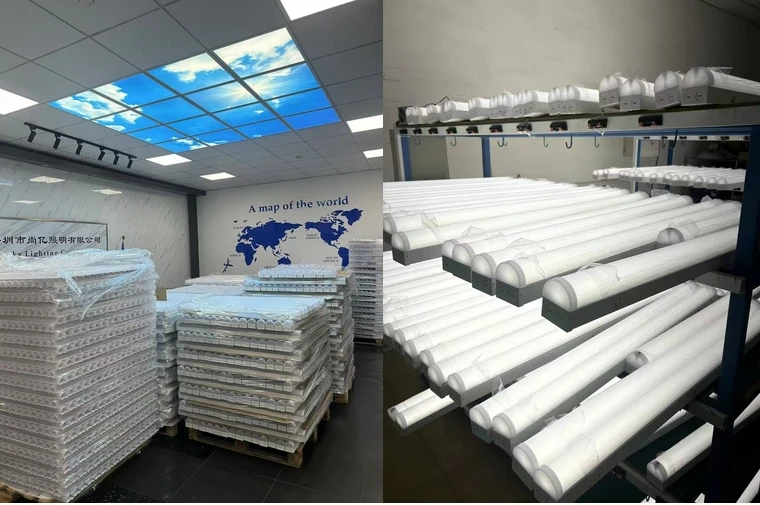
We have hands‑on experience in lux assessment and factory‑lighting retrofits. Contact us for tailored lighting proposals and fixture recommendations based on your workshop functions and site conditions. Feel free to request technical support, custom solutions or bulk quotations.





