After more than twenty years in foreign trade, I have handled quite a few farm and agricultural park lighting projects. Clients often ask: "What light distribution angle should we choose for the street lights?" If the optics are wrong, even adequate power and lumens can still leave the area under the pole very bright and the roadside dark, or spill light into fields or toward barns. Internal farm roads, yards, and entrances need strong uniformity and low glare, so distribution matters more than simply chasing a wide angle. Drawing from practical experience, here is how to choose.
First Consider Road Width and Pole Layout
Suitable optics differ for single-side versus double-side placement and for different road widths. On narrower roads, medium roadway distribution (such as Type II or similar bat-wing) often covers the opposite side well; on wider roads or when one side of the pavement needs emphasis, asymmetric distribution can put more light on the road surface. An experienced LED street light manufacturer can recommend optics more accurately from road width and pole positions.
Farms Need Even Spread and Limited Spill Light
Field roads serve machinery and trucks; strong bright-dark transitions hurt judgment. Near livestock areas, spill toward sheds should also be reduced. Rather than only pursuing a large beam angle, it is more reliable to keep light within the effective road width and control glare. A capable LED lighting OEM manufacturer usually offers multiple optical options and IES files for simulation.
Application Approach for Common Distribution Types
- Bat-wing / roadway distribution: Helps improve pavement uniformity; suitable for main lanes and branches.
- Asymmetric distribution: Suited to single-side poles and reduces wasted spill outside the roadway.
- Wider distribution: For open parking areas, combine with pole height to avoid a bright center with dark edges.
Final choice still depends on pole height and spacing, not the angle figure alone.
Reliability Affects Long-Term Results
Even with suitable optics, fast light decay or frequent failures will hurt uniformity. Choose products with solid drivers and heat dissipation, and prioritize an LED lighting supplier with 5 year warranty so the initial optical effect lasts longer.
Conclusion
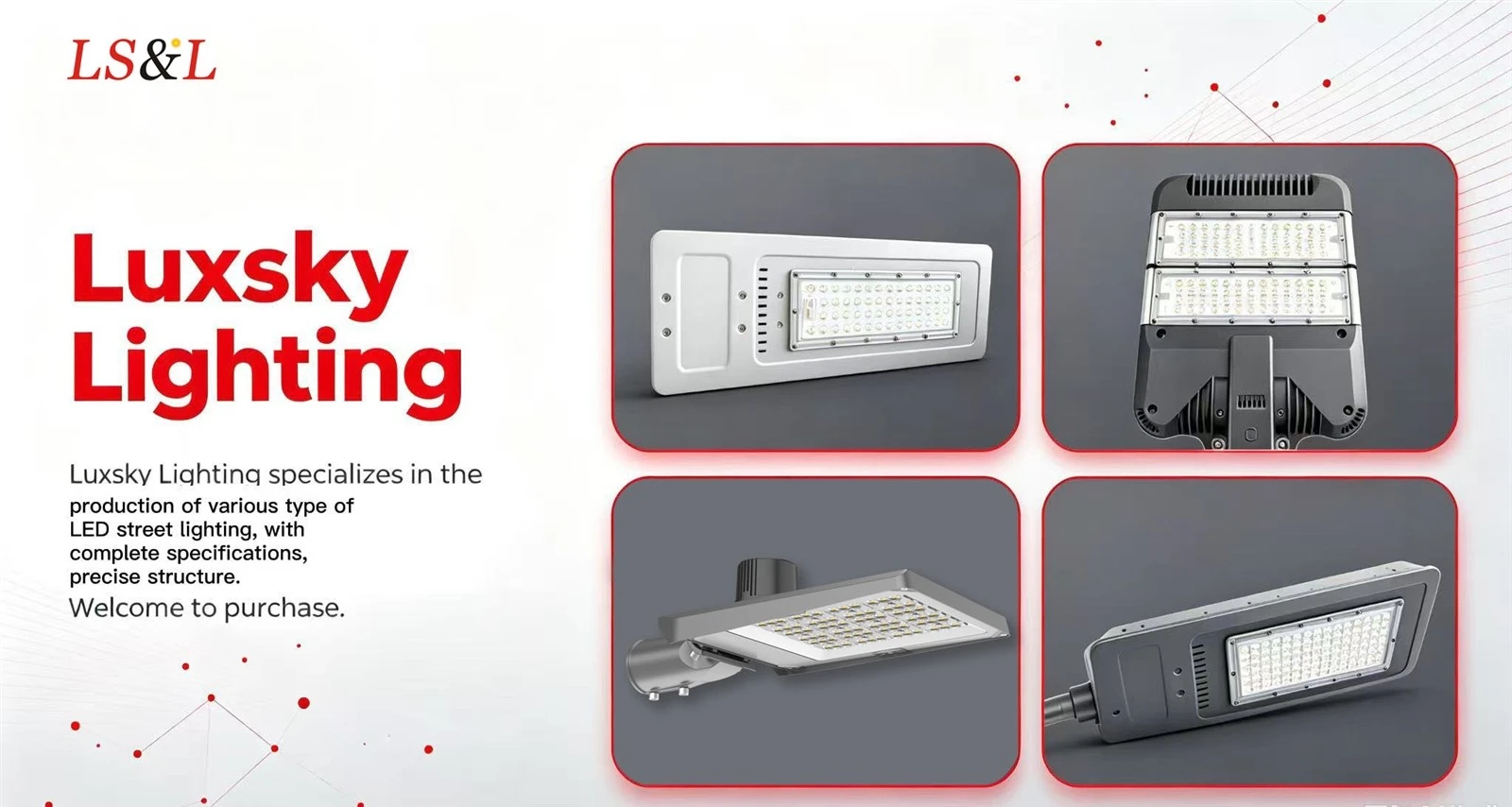
Light distribution angle for farm LED Street Lights should follow road width, pole layout, and the need for uniformity and controlled spill, with priority on effective, comfortable pavement lighting. Selecting a reliable LED street light manufacturer and a capable LED lighting OEM manufacturer, especially an LED lighting supplier with 5 year warranty, makes the optical plan more dependable. Luxsky Lighting specializes in LED street lights with stable quality and solid after-sales support. If you are selecting optics for a farm, feel free to contact us directly for tailored optical recommendations and LED street light solutions-reliable products that help you get nighttime road lighting right.