After years in the LED street lighting export business, there's a question almost every client asks before finalizing a deal: "Is your fixture housing die-cast aluminum or extruded aluminum?" It might sound like a small material detail, but it actually determines heat dissipation, structural strength, corrosion resistance, and even whether the fixture will last a full ten years. Let me walk you through the differences between these two materials.
What Are Die-Cast Aluminum and Extruded Aluminum?
Die-cast aluminum is made by injecting molten aluminum into a mold under high pressure to form complex three-dimensional shapes in a single process. Its advantage is that intricate designs - heat-sink fins, curved housing surfaces - can be formed as one integrated piece, resulting in higher structural strength and better sealing. This makes it especially well-suited for outdoor street lights, which require a high level of ingress protection.
Extruded aluminum, on the other hand, is made by pushing an aluminum billet through a die to create long profiles with a fixed cross-section, which are then cut to length. Its advantage is lower manufacturing cost and suitability for large-scale, standardized production. It's commonly seen in fixtures with simpler structures, such as some floodlights or basic street light housings.
Real-World Differences for Outdoor Street Lights
Based on years of working closely with factories, the differences between the two mainly show up in three areas:
- Heat dissipation: Die-cast aluminum can form complex heat-sink fin structures with greater surface area, keeping LED chip operating temperatures lower and lumen depreciation slower - critical for roadway led lighting projects aiming for long service life. Extruded aluminum has relatively simple fin structures, putting more thermal stress on high-power fixtures.
- Structural strength and sealing: Die-cast aluminum's one-piece construction means fewer seams and naturally better sealing, making it easier to achieve IP66 or higher. Extruded aluminum is typically assembled from multiple pieces, and poorly handled seams can become weak points for water and dust ingress.
- Appearance and customization: Die-cast aluminum allows for richer curved forms that suit modern urban aesthetic requirements for street lights, while extruded aluminum tends to have a more angular shape with less design freedom.
That said, extruded aluminum isn't unusable - it still fits cost-sensitive projects with simpler structural needs. What matters is whether the manufacturer has properly optimized the structure and sealing for the material's inherent characteristics.
Why Manufacturing Craftsmanship Determines a Street Light's True Quality
Honestly, many clients have been burned before - two fixtures both labeled "die-cast aluminum housing" can perform very differently, with one developing cracks, oxidation, or fin detachment within two or three years. The root cause is usually insufficient aluminum purity, poor mold precision, or inadequate surface treatment (coating/anodizing). This is exactly why we insist on strict quality control LED engineering lighting - from aluminum composition testing and die-casting mold precision control to coating adhesion testing. No step can be cut corners on.
Smart Street Lights Demand Even More From Housing Materials
As smart outdoor light solutions become increasingly common, fixtures now integrate sensors and communication modules, raising the bar for housing sealing and thermal stability, since electronic components are more sensitive to temperature and moisture. In this context, a one-piece, better-sealed die-cast aluminum housing is often the better choice for smart street lights.
Luxsky Lighting: Manufacturing Craftsmanship You Can See, Quality Built to Last a Decade
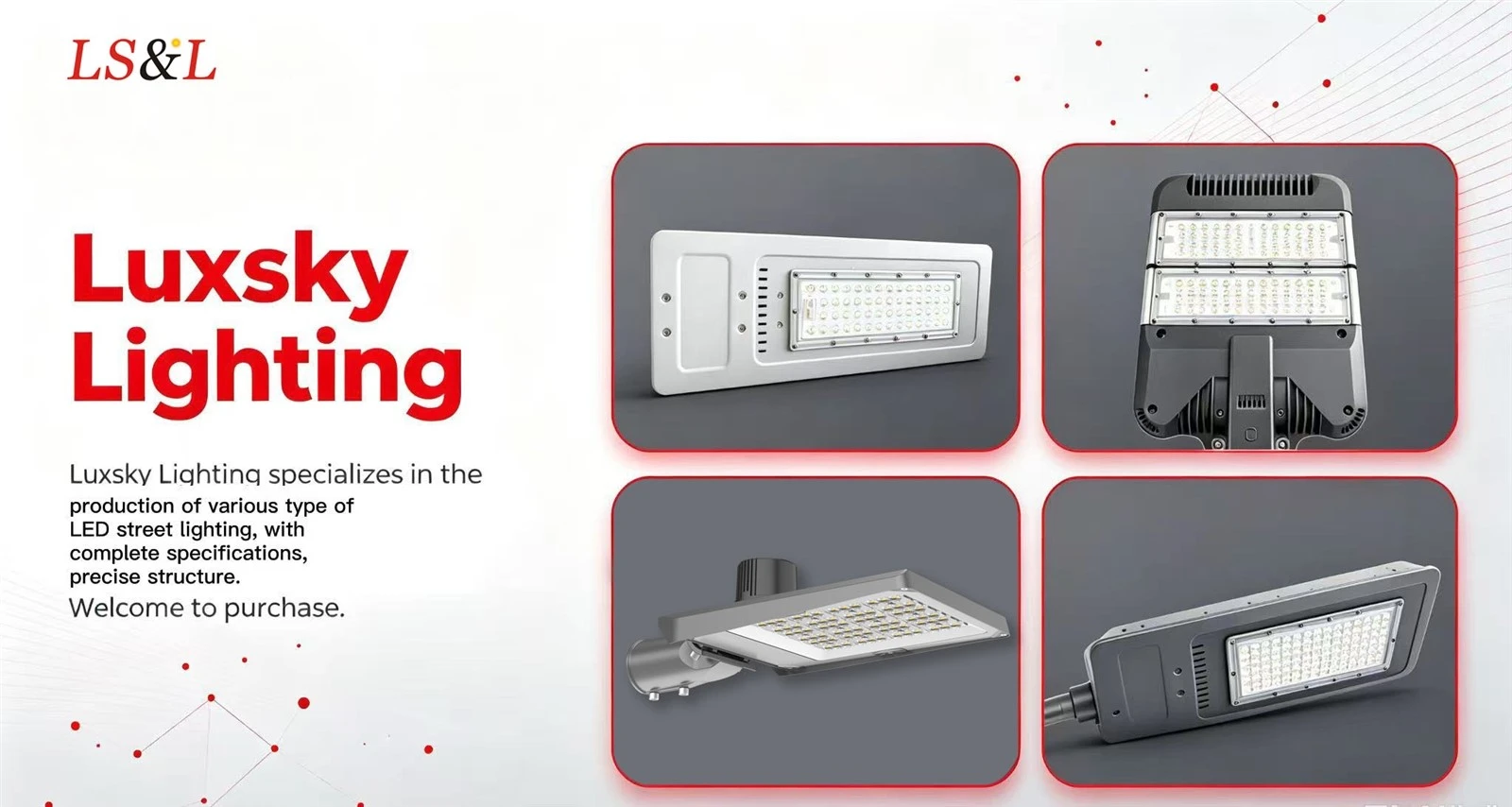
After all these years, all our flagship street light products use premium die-cast aluminum alloy housings - one-piece construction that minimizes seams, combined with precision coating processes to enhance corrosion resistance, all under strict quality control throughout. This ensures our fixtures maintain stable heat dissipation and long-term waterproof and dustproof performance even in harsh outdoor environments.
If you're sourcing a street light supplier whose manufacturing craftsmanship genuinely holds up, feel free to reach out to the Luxsky Lighting team. We can recommend die-cast or extruded aluminum options based on your project needs, along with supporting test reports.
Conclusion
Housing material directly determines a street light's heat dissipation, lifespan, and protective performance. Luxsky Lighting has spent years focused on LED street light R&D and strict quality control, with mature and stable die-cast aluminum manufacturing. If you have a street lighting sourcing need, contact us anytime for a quote and technical solution.