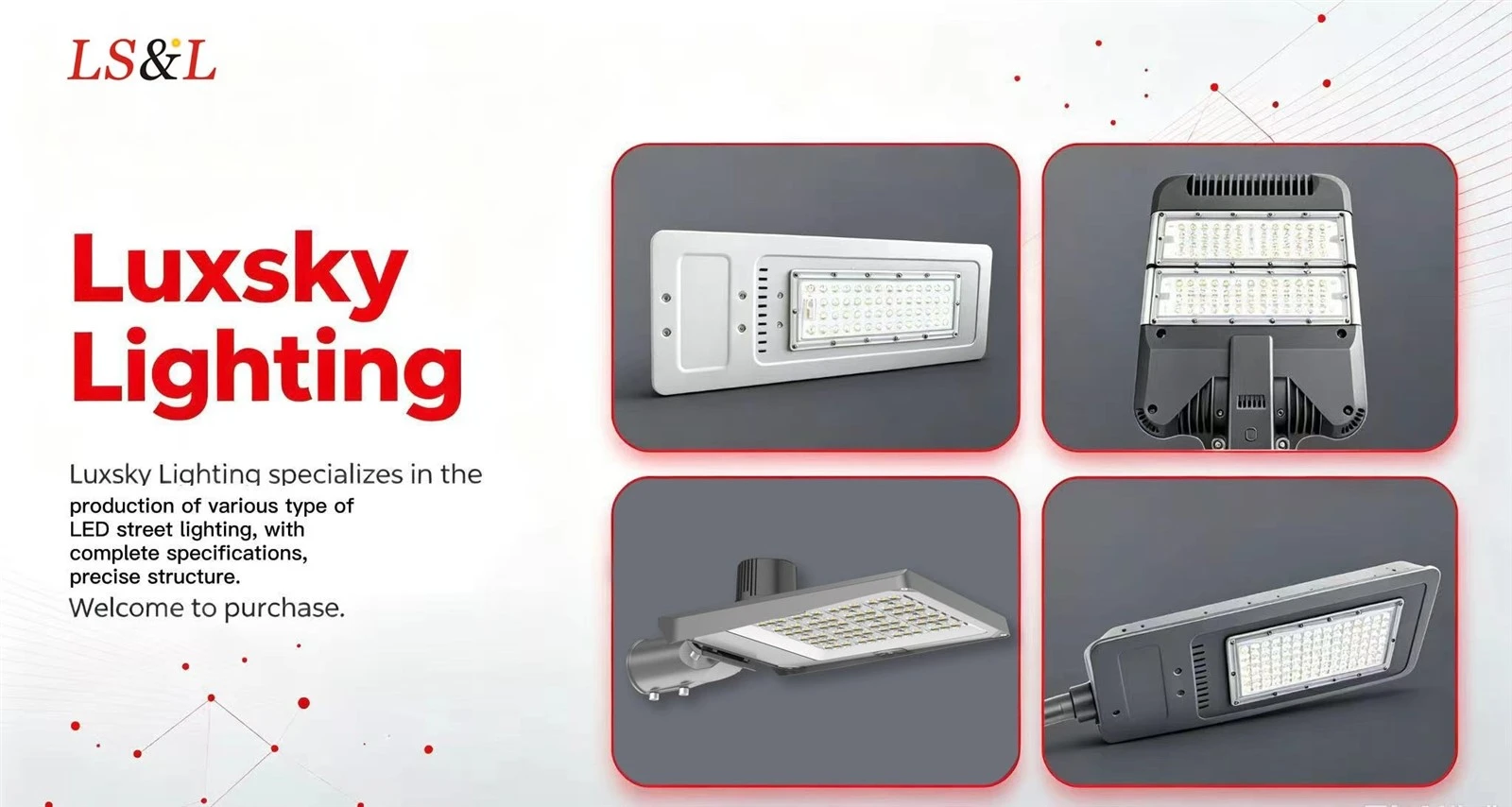
In the long-term stable operation of LED street lights, the structure of the heat sink and its effective heat dissipation area directly determine the fixture's lifespan, lumen maintenance, and overall reliability. As someone who has worked on the front lines of LED engineering and lighting foreign trade for many years, I have seen far too many projects fail because of inadequate thermal design-resulting in severe lumen depreciation, flickering, or complete failure within just two or three years. Today, I'd like to share, in practical terms, what heat sink structure and heat dissipation area really mean, and why they are so critical in Smart outdoor light and roadway LED lighting applications.
What Exactly Does a Heat Sink Do?
When an LED chip operates, roughly 70–80% of the electrical energy is converted into heat. If this heat cannot be efficiently transferred away, the junction temperature rises sharply, causing reduced luminous efficacy, color shift, and significantly shortened lifespan. The primary job of the heat sink is to quickly conduct heat from the light source module into the surrounding air, keeping the LED within a safe operating temperature range.
A mature, strictly quality-controlled LED engineering lighting product typically features a thermal system consisting of three key parts:
- A high-thermal-conductivity substrate (usually aluminum or copper PCB)
- The heat sink body itself (die-cast aluminum or extruded aluminum profile)
- Surface treatment (anodizing, powder coating, or specialized thermal coatings that improve radiative heat transfer)
- Common structural designs include fin-type, pin-type, honeycomb, and the increasingly popular integrated die-cast structure. Integrated die-cast heat sinks combine the light source, driver, and thermal chamber into a single unit, minimizing thermal resistance and shortening the heat path. This has become the mainstream approach for high-end roadway LED lighting.
How Should Heat Dissipation Area Be Calculated Properly?
Larger heat dissipation area is not automatically better-it needs to be "sufficient and rational." Simply put, a larger surface area allows more heat to be removed through convection and radiation. However, excessive area increases weight, cost, and wind resistance, which can create structural risks in strong outdoor winds.
A practical rule of thumb is that each watt of LED power requires an appropriate effective heat dissipation area, combined with proper fin height, spacing, and surface treatment. What truly determines cooling performance is not just "looking big," but:
- Whether fin spacing supports natural convection (too dense and dust accumulates easily; too sparse and area is insufficient)
- Whether fin height and thickness match the power level
- Whether the surface has been anodized or treated with a special coating (radiative heat transfer can improve by 20–30%)
- Whether the conduction path from the heat source to the fins is as short as possible
In Smart outdoor light and roadway LED lighting projects, we focus more on "effective heat dissipation area" and overall thermal resistance. A well-designed system can keep the LED junction temperature within a safe range even when ambient temperatures exceed 40°C, ensuring lumen depreciation stays within industry standards for five years or longer.
Why Do Export Projects Place Special Emphasis on Thermal Design?
Many overseas clients-especially those involved in municipal projects, highways, and smart city developments-pay close attention to lumen maintenance curves and actual temperature-rise data during acceptance. Poor thermal design can multiply later maintenance costs, which is exactly why strict quality-controlled LED engineering lighting is increasingly valued by procurement teams.
In real projects, we have seen the difference clearly: street lights of the same rated power with poor heat sink design can exceed 30% lumen depreciation after just two years, while those with solid thermal design still keep lumen loss under 10% after five years. The gap lies in whether the heat sink structure is rational, whether the effective heat dissipation area matches the power, and whether the entire luminaire has undergone rigorous thermal validation.
How Can You Quickly Judge Whether a Street Light's Thermal Design Is Reliable?
Here are a few practical checkpoints:
- Does it use an integrated die-cast aluminum heat sink for lower thermal resistance?
- Is the fin design optimized for dust resistance and natural convection?
- Are actual temperature-rise test reports and lumen maintenance data available?
- Has the complete luminaire passed strict aging tests as well as salt-spray, vibration, and other environmental reliability tests?
These are the points we repeatedly emphasize to customers in daily foreign trade work. True engineering-grade roadway LED lighting is never about looking impressive-it must withstand long-term exposure to harsh outdoor conditions.
Conclusion
At Luxsky Lighting, we have always treated heat sink structure and effective heat dissipation area as core competitive strengths of our LED street lights. From material selection and structural design to surface treatment, thermal simulation, and real-world testing, every step follows Strict quality control standards. This ensures outstanding reliability and longer service life in Smart outdoor lighting and roadway LED lighting applications.
If you are selecting LED street lights for municipal roads, industrial parks, highways, or smart city projects, feel free to contact us directly for detailed thermal design information, test data, and sample support. Choosing Luxsky Lighting's LED street lights means choosing a more stable, longer-lasting, and lower-maintenance lighting solution.