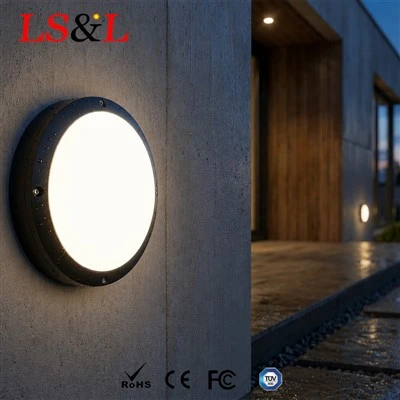
Many overseas buyers only compare prices when ordering microwave sensor lights and overlook sensor parameters and site compatibility. They often face false triggers or poor detection after delivery, delaying project schedules. With years of export experience, I have compiled a pre-order checklist. Today we cover what you should check before ordering an LED bulkhead light.
Core Sensor Parameters
First, verify the microwave module's adjustable settings, including detection range, hold time, and daylight threshold. Microwave modules vary widely between manufacturers. Low-cost versions often have fixed settings with no adjustment options, making them hard to adapt to complex factory conditions. Many aisle projects adopt round bulkhead lights fitted with tunable microwave sensors for on-site adjustment based on traffic patterns. Also check anti-interference performance and tolerance to metal objects and vibration, which directly decides whether unwanted activation will occur frequently.
Fixture Protection and Housing Compatibility
Sensor modules are vulnerable to dust and moisture, so you need to check the overall ingress rating of the light. For outdoor locations, humid workshops or wash-down zones, inadequate protection will cause module failure from water ingress. Make sure the whole fixture meets the rated IP standard, rather than only the main housing being sealed while the sensor probe remains unprotected. For damp and dusty industrial sites, many buyers prefer IP66 bulkhead lights. Its robust sealing structure offers reliable protection for built-in sensor components.
Power Supply and Driver Compatibility
Do not assume the sensor driver automatically fits local voltage. Confirm the input voltage range clearly. Some microwave sensor drivers only support narrow voltage bands. In regions with unstable power supply, lights may flicker, reboot or burn out. Also confirm whether the driver supports constant-on mode, so the sensor can be disabled for maintenance work.
Site Condition Verification
Confirm the installation environment with your client before placing the order. Areas packed with metal racks and frequent forklift movement disrupt microwave signals, so standard microwave sensors are not suitable here. Microwave sensors deliver good energy-saving performance on long, separate corridors with intermittent foot traffic. Check the mounting height as well; installation outside the rated range will weaken detection performance.
Certifications and Warranty Terms
For European and American markets, confirm relevant certifications in advance to avoid customs clearance issues. Clarify warranty coverage. Many suppliers only cover the LED board, excluding sensor modules, which leads to disputes later. Lock down warranty terms upfront and offer clear after-sales commitments to your customer.
Wrap-up
A microwave sensor fixture is not just a regular light with an extra sensor. Parameters, ingress protection, voltage compatibility and site conditions all matter. Comparing prices alone without checking details often results in failed commissioning. Confirm these points ahead of time to secure stable light performance and smooth project delivery.

If you plan to purchase microwave sensor lights and are unsure whether the specifications match your site, or need a checklist to share directly with your customer, send over your project details. We can assist with product selection assessment.