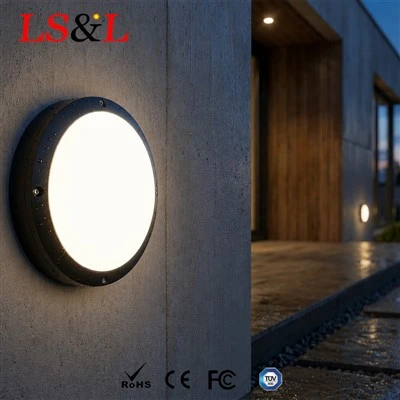
Many clients plan factory bulkhead lighting retrofits, yet insufficient pre-checks often lead to fitment issues, compliance failures or disappointing energy-saving results. With years of experience in engineering lighting foreign trade, I've compiled key checks before retrofitting to help you avoid costly rework.
1. Inspect existing wiring and power supply
Test the wire gauge and voltage stability, and confirm the maximum load of each circuit. Old fluorescent fixtures may have wiring incompatible with the new led bulkhead light. Models with emergency backup or microwave sensors require a separate permanent live circuit. If wiring in older factories is heavily degraded, rewiring is recommended instead of reusing old circuits to prevent short circuits later.
2. Match fixture rating to site conditions
Evaluate on-site temperature, humidity, dust, moisture and corrosive fumes. An IP65 bulkhead light works well for standard workshop corridors; upgrade to higher ingress ratings for wash-down zones or exterior walls. Also check for impact risks and verify the IK rating where needed. Do not place orders based only on appearance.
3. Verify mounting base and hole dimensions
Mismatched dimensions are one of the most common retrofit headaches. Many buyers assume new fixtures can directly replace old ones, only to find the mounting holes do not align. Measure the existing hole spacing and wall load capacity ahead of time. When selecting a bulkhead light for replacement, pick models compatible with original hole patterns to cut extra drilling and wall repair work and shorten construction time.
4. Confirm lighting requirements and local compliance rules
Clarify your retrofit goals: energy saving, brightness improvement, or fire emergency compliance. Emergency lighting along escape routes must meet local standards on lux level and backup runtime. Decide whether extra functions such as dimming, motion sensors or daylight harvesting are necessary. More features do not always equal a better solution; they raise costs and the risk of future faults.
5. Sort out budget, timeline and accessory list
Do not overlook auxiliary parts including expansion anchors, cable terminals, waterproof glands and spare batteries. Many retrofit projects run over budget because these small items are forgotten. Coordinate with installers to arrange work windows. Phased, zone-by-zone replacement is ideal to avoid long disruptions to factory production.
6. Prepare acceptance and after-sales plans in advance
Agree on test and acceptance criteria before the project starts. Set up power-failure tests for emergency units and adjust detection range and hold time for sensor versions on site. Check the supplier's warranty terms and spare part lead time. Fast access to replacements keeps production downtime low for factory retrofit projects.

If you are planning a factory lighting upgrade and unsure which fixture fits your site, or need side-by-side replacement options, send over your site photos, drawings and local code requirements. I can tailor a suitable solution to control costs and pass inspection smoothly.