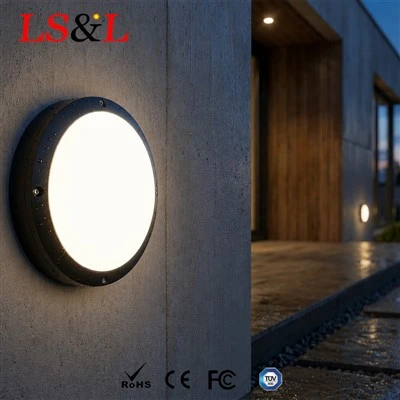
After more than a decade in lighting exports, factory clients often ask where industrial bulkheads should be mounted. Too high and the floor goes dim; too low and they are hit; on the wrong wall they fight pipework. Here is how to choose mounting positions more reliably, based on field experience.
Define What the Lamp Serves: Path, Doorway, or Fill Light
Routes and stairs should light floors and treads; vestibules and loading doors should cover people–vehicle conflict zones; plant rooms should cover inspection paths and operating faces. Position follows function-one mounting height for the whole plant rarely works.
When an led bulkhead light is used on escape or daily routes, even side-wall spacing usually removes mid-run dark bands better than clustering fittings under beams.
Height: Enough Light, Fewer Impacts
Too high cuts floor illuminance; too low invites forklift and carried-load strikes. Set height from route clearance and eye lines so the lamp sits below easily struck services yet above common contact height, and clear of door swings.
A round bulkhead light has a compact body, which makes it easier to find a wall spot on narrow links that stays out of the way and easy to service.
Read Spacing Together with Obstructions
Columns, cable trays, and pipes block light. Equal spacing on a drawing can still leave shadows behind columns. Adjust along the walked path on site, and tighten spacing slightly at turns and junctions.
Where sensors are fitted, aim detectors toward the walkway and keep them clear of extinguisher cabinets or signs.
Let the Environment Guide Wall Choice and Orientation
On humid, dusty, or semi-outdoor points, prefer wall faces that do not hold water and are easy to seal; use drip loops and firm compression on cable entry. On exterior or weather-exposed walls, specify an IP65 bulkhead light or higher protection and avoid long-term water on the top of the housing.
On vibrating walls, check fixing method so joints do not loosen and open.
Industrial Bulkhead Positioning Points
- Choose wall segments by path / doorway / plant-room function
- Balance mounting height for illuminance and impact avoidance
- Adjust spacing for column and service shadows on site
- Aim sensors for a clear view and reachable maintenance
- Match protection and drainage on wet, dusty, or exposed points
The right mounting position for industrial bulkheads is the sum of function, height, spacing, and environment. When the point is right, light is useful, impacts are fewer, and maintenance stays practical.
From years of working with factory and export clients, I know bulkheads are less about adding one more lamp and more about avoiding blocked light and easy hits. Positioning is like laying out a process-walking the route is the most accurate check.

If you are fixing mounting positions for plant bulkheads, share route width, ceiling height, and whether vehicles share the path. I can help identify which bulkhead light fits better and set clear height and point rules.