When I talk to buyers about an LED bulkhead light, they seldom ask about price first. It is: "Can you send me the certificates?" A missing or mismatched document can hold a container at customs, fail an on-site acceptance inspection, or complicate an insurance claim after a fault.
This guide covers the certificates and test reports that matter most for an industrial LED bulkhead light, and shows how to check that the paperwork really belongs to the product you are buying.
Why Certifications Matter for an Industrial LED Bulkhead Light
Factories, warehouses, car parks and ships are hard places for a luminaire, and replacing a failed fixture means downtime. Certificates protect you in three ways: they clear customs, they pass project acceptance, and they support an insurance claim if something goes wrong.
A certificate shows compliance. The test report behind it is the evidence, and that is what experienced buyers ask to see.
Must-Have Certificates for Market Access
CE (LVD and EMC)
CE is required to sell a luminaire in the EU. It normally covers the Low Voltage Directive and the EMC Directive. It is a declaration made by the manufacturer, so ask for the Declaration of Conformity and the supporting test reports: EN 60598 for safety, EN 55015 and EN 61547 for EMC. Check that the report names the exact model and comes from an accredited laboratory.
Versions with a microwave sensor may also fall under the Radio Equipment Directive, so ask your supplier to confirm this for the version you are buying.
RoHS
RoHS restricts hazardous substances such as lead and cadmium in the product itself. REACH is broader and covers chemical substances in general. Many EU buyers ask for both.
Other markets
Requirements change by destination, so confirm the target market before you order.
|
Market |
Typical requirement |
What to ask for |
|---|---|---|
|
EU / EEA |
CE, RoHS |
Declaration of Conformity, EN 60598 and EMC reports, RoHS report |
|
Great Britain |
UKCA or CE (both accepted) |
The same documents |
|
Australia / New Zealand |
RCM |
Compliance records and test reports |
|
North America |
UL / cUL or ETL listing |
Listing number and file number |
Additional Certificates Buyers Often Ask For
Tenders often add a few more documents:
- ENEC or CB: European safety approval, requested by many contractors and engineering firms.
- LM-79 and LM-80 / TM-21: the usual basis for efficacy and lifetime claims.
- ISO 9001: shows the factory runs a quality management system.
Not every project needs all of them. Match the list to the destination market and the tender.
How to Check the Paperwork
Check four things on every certificate: the holder matches the factory or supplier, the model number matches the quoted product, the report is still in date, and the issuer is a recognised laboratory or certification body. Ask for the full test report, not only a one-page certificate. The two problems I see most often are a model number that doesn't match the physical product and a report that expires by the time the goods reach customs. Either can stop a shipment.
Our Example: 275mm 3CCT LED Bulkhead Light
Our LS-04-CL-275-DW is rated IP66 and IK10, carries CE and RoHS, and comes with a 5-year warranty. The housing is die-cast aluminium with a polycarbonate cover. Power (15-24W) and colour temperature (3000K, 4000K or 6000K) are adjustable, so we ask buyers to confirm that the report covers the settings they will use.
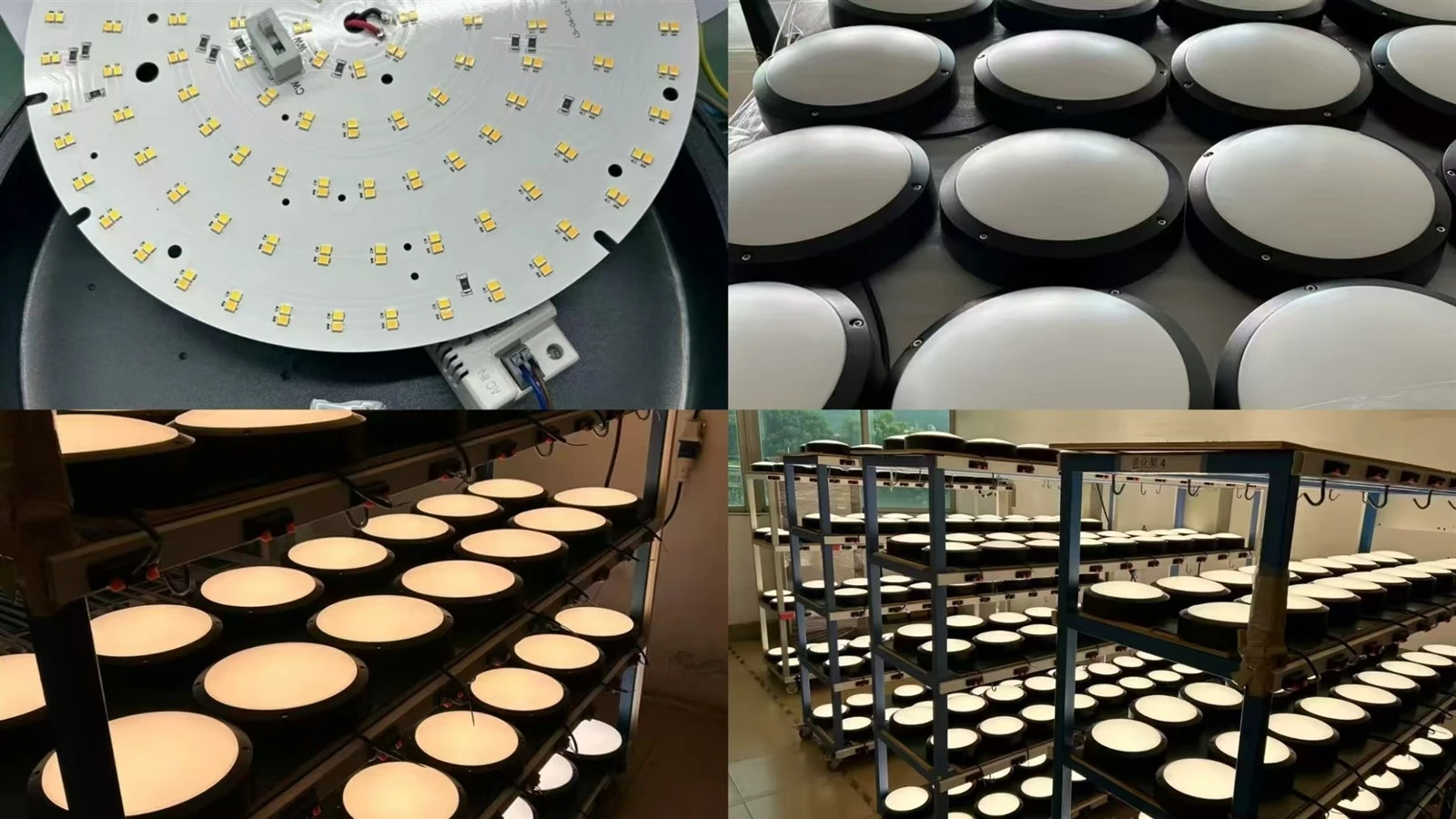
Full test reports are available on request to support customs clearance and project acceptance. Specifications are on the product page: https://www.luxsky-light.com/led-ceiling-lights/3cct-led-bulkhead-light-275mm.html
Closing
Ask for the documents before you compare prices. Reports that match the model and are still in date will save you more time than a small price difference.
Tell us your target market and we will reply within 24 hours with the matching certificate package for our LED bulkhead light, including the CE and RoHS documents and full test reports.
FAQ
Q: Is CE enough for an LED bulkhead light to enter Europe?
A: CE is the legal minimum. Many projects also ask for a RoHS report, ENEC, or full third-party test reports, so always follow the tender documents.
Q: Does an emergency version need separate testing?
A: Usually yes. An emergency module changes the electrical design, so ask for a report that covers the emergency version specifically.
Q: Can I see the test reports before I place an order?
A: Yes. We share full reports at the quotation stage.