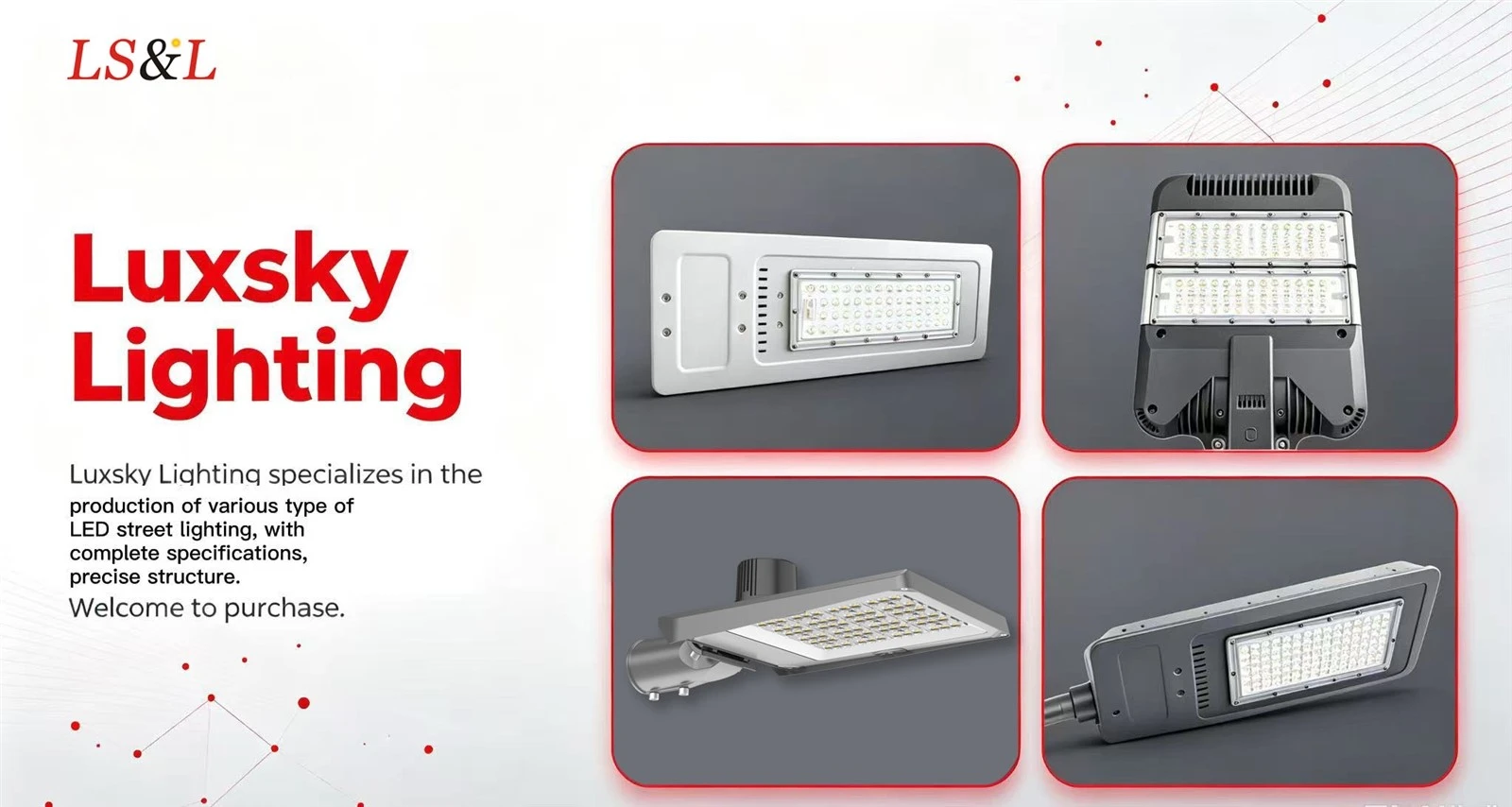
I've spent over a decade in the street lighting export trade, and in coastal port projects, the biggest headache isn't illuminance or price - it's corrosion. I've seen plenty of clients buy fixtures only to find, a year or so later, white powder blooming on the housing, screws rusted solid, and pole bases eaten through, ending in a full batch return. When we covered IP ratings earlier, I mentioned that waterproof doesn't mean corrosion-proof. Today I want to explain properly why anti-corrosion design is a must for ports.
What Actually Happens to Fixtures by the Sea
Sea wind carries large amounts of salt - chloride ions. When this salt spray settles on a fixture's surface and meets moisture, it forms a conductive electrolyte that accelerates electrochemical corrosion of metal. Chloride ions penetrate aggressively, and ordinary coatings and ordinary aluminum simply don't last long in this environment. The closer to the sea and the closer to the quay front, the worse the corrosion - which is the root reason port roadway LED lighting products have shorter lifespans than inland projects.
What Corrosion Actually Causes
The damage goes well beyond appearance. First, corroded heat sinks and housings lose cooling efficiency, raising chip junction temperature and accelerating lumen decay. Second, corroded seals and mating surfaces fail, letting water in and causing internal short circuits. Third, corroded screws and wiring terminals develop higher contact resistance, leading to overheating or open circuits. Fourth, corroded pole bases and flanges directly compromise structural safety, creating a pole-collapse risk in strong winds. Once any of these show up, repair costs on high mast lights are steep.
Anti-Corrosion Starts With Materials
Materials are the first line of defense. Housings should use low-copper die-cast aluminum alloy - the higher the copper content, the worse the corrosion resistance. Hardware must be 316 stainless steel, since standard 304 can still rust in heavy salt spray. And different metals should never be placed in direct contact, otherwise galvanic corrosion sets in and accelerates damage to one side. These material differences are exactly where cost and quality diverge under a strict quality control LED engineering lighting program.
Surface Treatment Determines Corrosion Life
Beyond materials, surface treatment matters just as much. A common approach is anodizing followed by high-quality powder coating, with coating thickness and adhesion both up to standard. For ports, it's worth choosing a coating system meeting C5-M corrosion protection standards, validated through long-duration neutral salt spray testing. Poles need double protection - hot-dip galvanizing plus coating - and even foundation bolts shouldn't be overlooked.
Don't Ignore the Inside Either
Many people focus only on external corrosion protection and overlook the interior. Salt in the coastal air can enter the fixture through the breathing effect, corroding circuit boards and connectors. So PCBs should be conformally coated, wiring terminals should use corrosion-resistant sealed types, and fixtures should ideally include a waterproof breather valve to reduce salt spray intrusion.
Smart Modules Need Corrosion Protection Too
If a project includes a Smart outdoor light control system, the sensors, antennas, and communication modules are permanently exposed and need anti-corrosion treatment and sealing as well - otherwise these precision components often fail before the fixture itself.
Anti-Corrosion Investment Pays Off
Anti-corrosion design raises the purchase price somewhat, but for a hard-to-maintain environment like a port, what it buys is a longer lifespan and fewer repairs. Looking at total cost, it ends up far cheaper than going with a low-cost product.
What We Do
At Luxsky Lighting, we hold to strict quality control LED engineering lighting standards. Our port series uses low-copper die-cast aluminum, 316 stainless steel hardware, and anodizing plus powder coating, with conformal coating and breather valve designs, and salt spray tests verified by third-party labs with reports available for checking.
Conclusion
Corrosion at a coastal port is a constant, long-term challenge, and anti-corrosion design isn't a bonus - it's a requirement. Luxsky Lighting has focused on LED street light engineering for years, holding to strict quality control to deliver dependable roadway LED lighting solutions to clients worldwide. If you're selecting products for a coastal port project, reach out to us for an anti-corrosion plan and a quote.