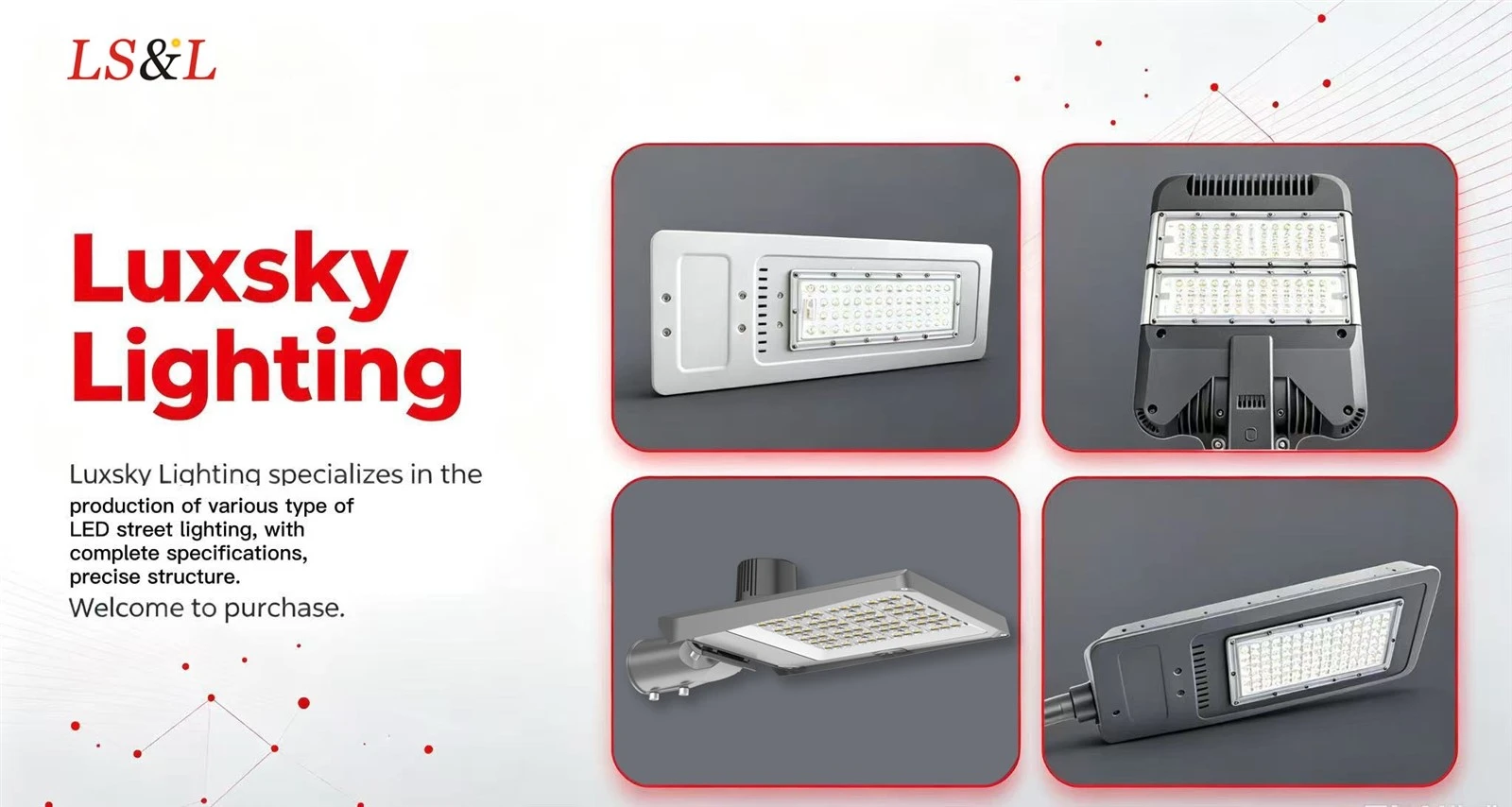
Salt spray is one of the most common corrosive factors in coastal and port areas. As a foreign trade professional with over a decade of experience in the lighting industry, I have seen many projects suffer from neglecting the impact of salt spray-fixture housings corroding, seals failing, and drivers failing prematurely-resulting in significantly shorter lifespans than expected and seriously affecting the long-term stable operation of roadway LED lighting. Today, drawing on practical experience, I will discuss whether a salt-spray environment affects the lifespan of LED Street Lights and how to effectively address it.
How Does Salt Spray Accelerate Fixture Aging?
Chloride ions in salt spray are highly corrosive and gradually attack metal housings, screws, and seals. Once the protective layer is compromised, moisture and salt more easily enter the fixture interior, leading to:
- Corrosion of housings and brackets, reducing structural strength
- Aging and cracking of sealing gaskets, causing waterproof performance to fail
- Corrosion of drivers and electronic components, increasing failure rates
- Accelerated light decay and a noticeably shortened overall service life
This is especially true for Smart outdoor light systems, which integrate more control modules and are more sensitive to corrosion. In a salt-spray environment, without targeted protective design, smart functions are often the first to be affected.
Strict Quality Control LED Engineering Lighting Is the Key to Salt-Spray Resistance
Truly suitable roadway led lighting for salt-spray environments must incorporate anti-corrosion design into the overall engineering. Strict quality control LED engineering lighting emphasizes the selection of highly corrosion-resistant materials, high-quality powder coatings, and reliable sealing structures, verified through rigorous salt-spray testing. High-quality products simulate long-term salt-spray exposure to ensure that housings, connectors, and internal circuits maintain stable performance in corrosive conditions.
Many low-cost products only apply basic anti-corrosion treatment with thin coatings and ordinary seals. They may appear normal in the short term, but significant corrosion and failures often appear within one or two years. Only engineering-grade verified designs can truly extend fixture service life in salt-spray environments.
Practical Selection and Protection Advice
Prioritize high anti-corrosion design: Focus on housing materials, coating processes, and salt-spray test reports.
Simultaneously improve protection ratings: Reliable waterproof designs such as IP66 effectively reduce salt-spray intrusion.
Pay extra attention to smart systems: Smart outdoor lights require good anti-corrosion and sealing for control modules as well.
Choose suppliers with actual project experience: Confirm that Strict quality control in LED engineering lighting is truly implemented.
As an experienced foreign trade professional, I often remind clients: salt spray is not a short-term issue but a long-term challenge that coastal and port luminaires must face. Selecting products with proper anti-corrosion design and controllable quality is the only way to truly ensure service life.
Conclusion
We have always adhered to the standards of Strict quality control in LED engineering lighting. Our products have accumulated extensive experience in roadway LED lighting and Smart outdoor light applications for coastal and port projects, delivering solid salt-spray resistance and stable, reliable quality. If you are looking for high-quality LED street lights for a salt-spray environment project, please contact us directly to learn more about Luxsky Lighting's LED street light solutions and let professional products safeguard your project.