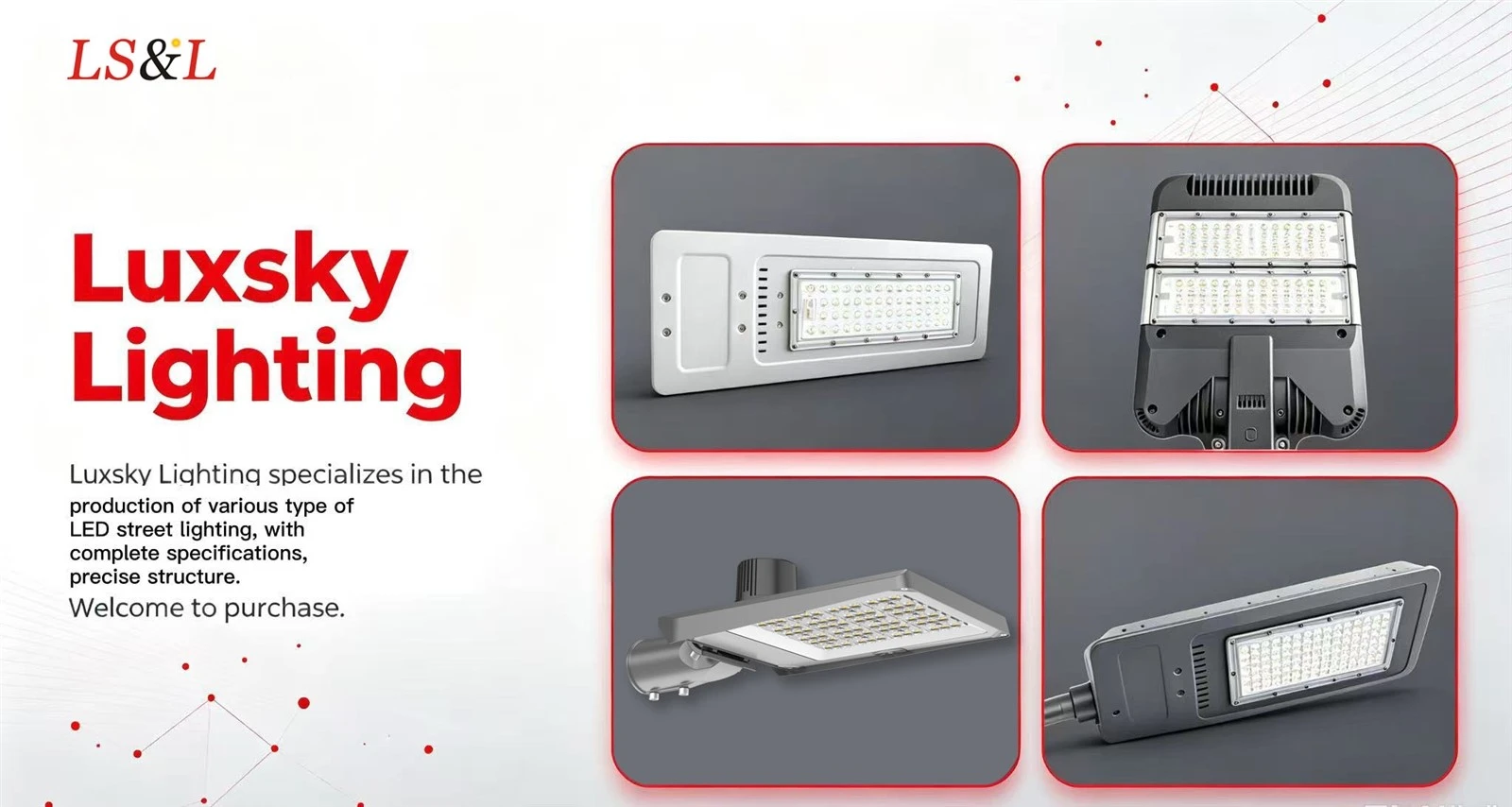
As an LED street light manufacturer with more than twelve years of export experience, I have supplied lighting to farms, logistics parks, hospitals and industrial zones in the Middle East, Southeast Asia, Africa and South America. A farm manager once told me: "The lights were bright in the first year, but by the third summer many were dim or dead." Heat is the silent enemy of LED lighting, and a farm makes it worse with strong sun, dust and enclosed, humid air. Here is why heat dissipation matters and how to judge it.
Heat Shortens LED Life
LED chips turn most of their input power into light, but a portion becomes heat. If that heat cannot leave the fixture, the junction temperature rises, brightness fades faster and the driver ages sooner. A common engineering rule of thumb is that higher operating temperature shortens lifespan noticeably. Good LED street lights for farms should move heat quickly from the chips and driver into the air, so the light stays bright and stable for years.
Farm Conditions Make Heat Harder to Manage
Summer temperatures above 40°C, direct sun on the housing, dust on the fins and poor airflow around barns all reduce cooling. Dust is especially important: a layer of dirt on the fins works like a blanket. Choose a smooth, open fin design that is easy to clean, and plan to wipe the fixtures once or twice a year. Humid, ammonia-rich air also attacks poor housings, so heat control and sealing must work together.
What Good Heat Dissipation Looks Like
Look for a die-cast aluminum housing with a large fin area and a design that separates the chip heat from the driver heat, so the driver does not cook in the chips' warmth. Avoid thin, cheap housings and sealed boxes with no thermal path. Ask for the working temperature range, for example -20°C to +50°C, and a test report if the supplier can provide it. Running a fixture below its rated power also keeps it cooler and extends its life.
Use Smart Control to Reduce Heat and Energy
Farms are quiet in the middle of the night, so there is no need to run every light at full power. Photocells, motion sensors and dimming lower the output at quiet hours, which reduces heat and electricity use together. Quality LEDs already save about 50% to 70% electricity compared with old sodium or metal halide lamps, and dimming adds more, which matters on farms with long cable runs. A cooler fixture also keeps its optics accurate, so a tractor driver is not dazzled, even for two seconds, by a drifting beam. Solar versions can suit remote areas. These values are general references, so follow your local standard.
Choose a Supplier Who Stands Behind the Product
Heat damage shows up after one or two summers, so a real warranty matters. Dust, humidity, heavy rain and lightning are everyday risks on farms, so I also recommend IP66, IK08 and surge protection of 6kV to 10kV. Replacing one fixture on a 6-meter pole means hiring equipment and stopping work, so I suggest an LED lighting supplier with 5 year warranty and a real factory behind it. As an LED lighting OEM manufacturer, we also customize wattage, beam angle, color temperature and branding for project buyers and distributors. Our quality standard includes:
- Branded LED chips and drivers, 100% aging test before packing
- Die-cast aluminum housing, IP66 / IK08, 6kV to 10kV surge protection, CE and RoHS certified, with real IES files and test reports for DIALux design
When a customer asks me for a 5-year warranty, I can say yes with confidence, because we test before shipment, not after complaints.
Conclusion
Good heat dissipation keeps farm LED street lights bright and reliable by protecting the chips and driver from sun, dust and humidity. Our LED street lights are built with strict quality control, so they stay bright, stable and dependable for years.
If you are planning a new farm project or upgrading an old one, choose Luxsky Lighting. Contact us today for a free DIALux layout and a competitive quote.