

Last spring, a procurement manager from a large industrial park outside Riyadh emailed us asking for something very specific: LED street lighting bundled with a full intelligent control system - not just fixtures, but dimming schedules, fault alerts, the whole platform. At the time we were mid-shipment on a fairly standard LED order for a long-time client in Vietnam, so the contrast stuck with me. Two years ago, maybe one in ten inquiries mentioned "smart lighting" or "daylight sensors." Now it's closer to half, and for industrial park tenders specifically, it's becoming the default ask rather than the exception.
That Saudi project ended up going with a Zigbee-based mesh system across the main logistics roads and a simpler photocell-only setup on the low-traffic perimeter - a hybrid approach we now recommend fairly often, since it lets clients control cost without giving up the reporting they actually need on the roads that matter. More on why that split makes sense below.
I've spent 12 years exporting lighting equipment, mostly into the Middle East, Southeast Asia, and increasingly Africa. This piece is less a sales pitch and more a rundown of what's actually changed, what I'd tell a buyer evaluating this for the first time, and where the numbers I quote come from (and where they don't).
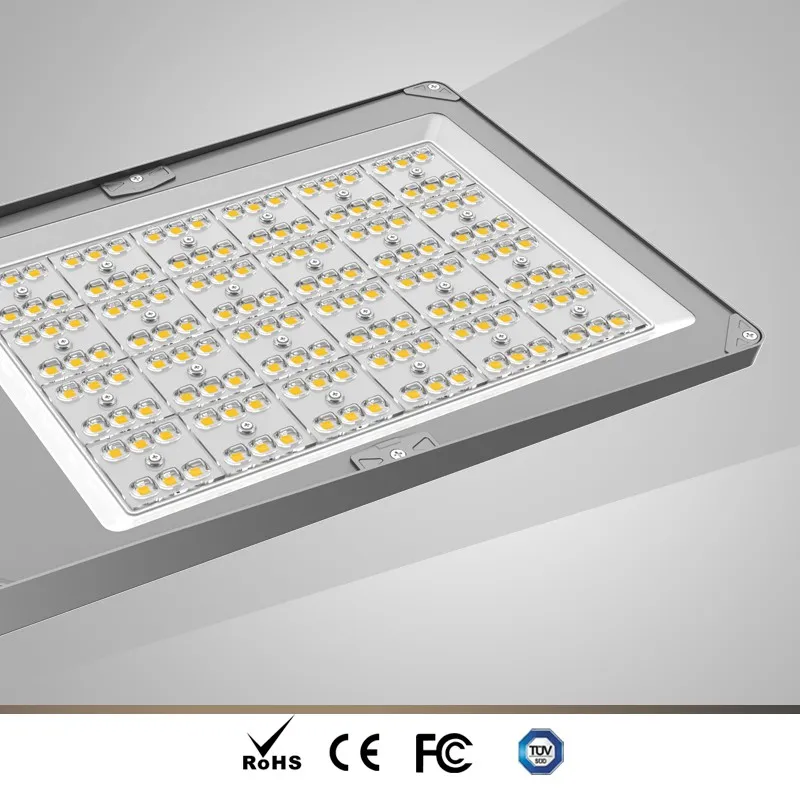
The Old Way Was Wasting Money Quietly
Most industrial parks we work with started out on high-pressure sodium lamps, or first-generation LEDs with no controls at all. Functionally they worked. But three problems kept surfacing across almost every audit we ran:
Energy waste was the biggest one, and it's largely invisible until someone measures it. Parks that run lighting all night for security reasons - which is most of them - were routinely burning 40–60% more electricity than necessary during the 1 a.m.–5 a.m. window, based on internal metering data we've collected across roughly 30 retrofit projects since 2019. Nobody notices this on a monthly bill; it shows up when you compare zone-by-zone consumption against actual foot and vehicle traffic.
The second was maintenance. A failed fixture on a back access road might not get reported for days, especially overnight when patrols are thinnest - and by "reported," I mean a security guard happens to notice it, not that anything flags it automatically. That delay is pure labor cost stacked on top of a safety risk.
Third, and this one came up more from European buyers than anyone else: over-illumination and light pollution complaints, usually tied to ESG reporting requirements that didn't exist five years ago but now show up in nearly every RFP we see from EU-linked operators.

What an Intelligent Lighting System Actually Fixes
-
Daylight sensing is the easiest win, and most clients start here
A decent photocell-based LED street light with sensor turns on at dusk, off at dawn, and - if the sensor quality is good - compensates for fog or heavy cloud cover without needing a technician to recalibrate it. This is the low-effort, high-return upgrade. Across our own client base we've consistently seen 30–50% reductions in lighting energy spend after this single change, though the exact number depends heavily on baseline schedule discipline (parks that were already disciplined about manual dimming see less dramatic gains).
-
The bigger shift is centralized control
This is where "intelligent" stops being a checkbox and becomes an operating tool. A decent platform - accessible from a browser or a phone - lets a facilities manager set different dimming curves for main roads versus loading docks versus warehouse perimeters, get an alert with a specific pole ID the moment a fixture drops out, and pull historical consumption data zone by zone instead of guessing from one aggregate meter.
Most installs now run over Zigbee, NB-IoT, or 4G rather than new copper, which matters more than it sounds - rewiring an active industrial site is expensive and disruptive, and being able to skip it is often the deciding factor in whether a client greenlights the smart upgrade at all versus deferring another year.
One thing worth being honest about: the ROI on the control platform itself is slower and messier than the sensor upgrade. Sensors pay for themselves in reduced electricity. The platform's payoff is mostly labor and downtime reduction, which is real but harder to put a clean number on - I'd be skeptical of any vendor who gives you a precise payback period for the software layer alone.

What I'd Tell You to Check Before You Buy
- Match certifications to the destination market, not the manufacturer's home market. CE and RoHS cover most of the Middle East and EU; UL matters for North America; some Gulf states now also want SASO conformity separately from CE. Get this in writing before the order ships, not after customs flags it.
- IP66 or IP67 is the baseline for anything outdoors in a working industrial site - dust, condensation, and the occasional pressure-washing during facility maintenance will find weak seals eventually.
- Ask for the photocell's actual test report, not just a spec sheet claim. Sensor drift and slow response time are the most common field complaints we hear about, and they're hard to catch from a datasheet.
- If dimming protocol matters to your integrator, ask specifically. Some systems run on 0–10V, some on DALI, some on proprietary PWM control tied to the vendor's own app - and switching platforms later because you didn't check this is expensive.
- Budget for slightly longer lead times. Controller boards and platform licensing add complexity that basic fixtures don't have, so intelligent systems typically run 25–40% higher upfront and take a bit longer to manufacture. Most clients we work with see that gap close by year two through energy and labor savings, though this varies with local electricity pricing.
- Push for a warranty of at least 3 years, ideally 5, and get clarity in the contract on where the fixture warranty ends and the software/platform support begins - these are often handled by different teams even within the same vendor, and buyers get caught in the gap.

Where This Is Heading
Demand is accelerating fastest in the Middle East, Southeast Asia, and parts of Africa, largely tied to new industrial zone development. In Europe and North America, the driver is less about new installs and more about retrofitting existing parks to meet carbon reporting and ESG disclosure requirements that are tightening year over year.
The plain version: basic illumination is no longer the differentiator it used to be in a tender. The systems that win now are the ones that can show a facilities manager a dashboard, not just a bright road.
If you're evaluating a retrofit or new build and want to talk through fixture compatibility, certification requirements for your target market, or a rough cost comparison between a sensor-only versus full-platform approach, feel free to reach out - happy to walk through it.
FAQ
Q1: How much more do intelligent systems cost, and is it worth it?
A: Expect 25–40% more upfront. Payback typically lands in year two or three depending on local electricity rates and how large the park is - smaller sites with high labor costs sometimes see faster returns than large sites with cheap electricity.
Q2: Do daylight sensors hold up in bad weather?
A: The good ones do. Look for sensors with compensation logic that uses historical light-level data to smooth out sudden drops from fog or storm cover, rather than just reacting to the current reading and flickering.
Q3: Is there a lot of new wiring involved?
A: Usually not. Zigbee, NB-IoT, and 4G-based systems are built to run over existing power infrastructure specifically so you're not trenching new cable through an active site.
Q4: How long does a retrofit actually take?
A: Small parks: 1–2 months. Larger sites: 3–6 months, and we almost always recommend phasing it zone by zone rather than shutting down lighting across the whole site at once.
Q5: Which certifications should I actually ask for?
A: CE, RoHS, and UL cover most markets, but check for country-specific add-ons (SASO for Saudi Arabia is a common one we see missed).
Q6: Can we keep our existing poles?
A: Usually, yes - if pole height, arm length, mounting interface, and voltage line up. We'd still recommend a quick site survey first; partial wiring upgrades are common even when the poles themselves are fine.





