

With years of experience in foreign trade for overseas food industrial lighting, I've found flicker is a hidden hazard in many factories. Ordinary flickering lights may seem functional, yet they cause misjudgment during quality inspection and distorted footage for machine vision, failing safety audits for European and American food workshops. Drawing on abundant on-site engineering cases, I will break down the core value and selection tips of flicker-free lighting for the food processing sector.
1. Prevent visual misjudgment and improve manual quality control accuracy
At delicate workstations for food sorting, color screening and defect inspection, workers need long hours of visual tasks. Traditional flickering lights create visual afterimages and blurry vision, making it hard to spot tiny dark spots, color deviations and signs of spoilage on ingredients.
The weatherproof LED batten light built for workshop conditions adopts constant-current flicker-free drivers to deliver steady light. It reduces eye strain during extended shifts, helps identify subtle defects on raw materials, cuts the rate of defective products and stabilizes food quality before shipment.
2. Compatible with industrial cameras to meet smart production recording requirements
Modern food factories widely use assembly line monitoring, AI quality inspection and high-definition capture devices. Flickering lighting leads to rolling bands, frame breaks and color distortion in captured images, triggering false readings from intelligent inspection systems and compromising the accuracy of automated production data.
The professional engineering-grade weatherproof LED light maintains high-frequency flicker-free light output, matching the frame rate of industrial cameras perfectly. It delivers ripple-free clear footage to support stable operation of intelligent inspection and video surveillance, meeting smart production standards for modern food processing plants.
3. Avoid compliance risks and pass overseas project acceptance smoothly
European and American food industries impose strict standards that ban low-flicker lighting in workshops. Flickering lights harm workers' eyesight and count as occupational safety hazards, which are key reasons for deduction during overseas project inspections.
The compliant industrial IP65 LED tri proof light combines flicker-free optical performance with dust and water resistance. It adapts to harsh workshop conditions including washdown sanitation, high humidity and heavy dust, and meets overseas lighting safety codes to prevent acceptance failures at the hardware level.
4. Protect workers' eyesight and reduce occupational health risks
Food processing plants usually run two-shift long continuous operations. Long-term exposure to flickering light irritates human eyes, easily causing eyesight degradation, dizziness and fatigue. This hurts productivity and raises occupational health risks for the facility.
Flicker-free soft lights produce even and stable illumination with invisible flicker eliminated. They optimize the workshop light environment, protect employees' vision, and lower operational errors and efficiency loss caused by visual fatigue.
Flicker-free lighting is essential for modern food processing. It does more than improve working experience; it serves as a core requirement for better quality control, smart manufacturing and overseas compliance. Conventional flickering lights can no longer meet high standards for food plants. Select flicker-free dedicated lighting with qualified protection ratings to balance production efficiency and regulatory compliance.
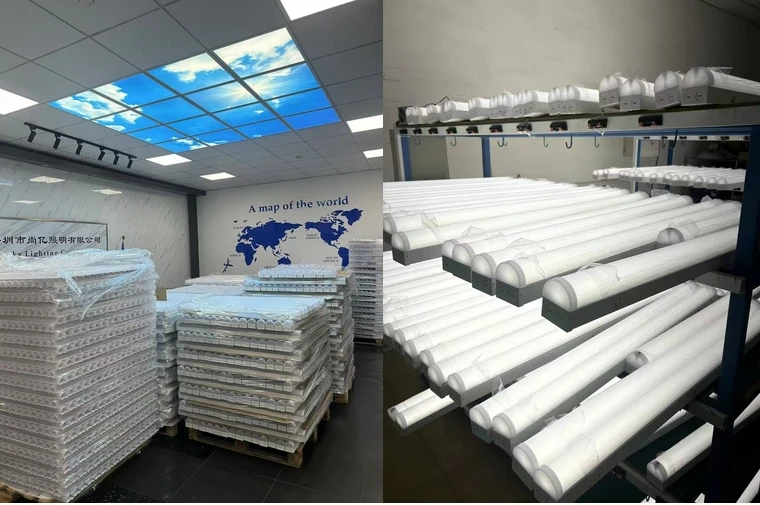
If your workshop suffers from light flicker, and you worry about compromised inspection accuracy and failed acceptance, or you are unsure how to pick compliant flicker-free industrial lights, feel free to contact me. With solid experience in overseas food lighting projects, I can match customized long-lasting lighting renovation solutions that fit your site.





