1) Smart lighting can adopt a unified platform architecture and a discrete (vertical) platform architecture or a hybrid architecture.
2) At this stage, the construction of smart lighting basically adopts a separate platform architecture, based on resource conservation and high efficiency, taking into account industry policies and data control, a hybrid architecture can be used for pilot in the near future, and a beneficial exploration is carried out for the construction of a unified platform architecture in the future
3) The unified Internet of Things management platform for smart lighting can solve the common problems of application development such as multi-protocol adaptation, massive connection, data storage, device management, rule engine, event alarm, and resource management for developers. Shorten the application development cycle, reduce the cost of application development, and promote the innovation and upgrading of traditional enterprise applications. In the tide of smart city construction, the Internet of Things, big data, cloud computing and other technologies are used to build urban smart lighting, solve the existing deficiencies and problems of urban public lighting, promote the improvement of urban public lighting management, and promote energy conservation and emission reduction; At the same time, it has become an important part of the construction of smart cities by taking advantage of street lamp pole resources and integrating a variety of technologies to realize the comprehensive utilization of lamp poles, improve the intelligent level of urban infrastructure, and lay a solid foundation for a smart city that truly realizes the integration of information resource sharing. Based on the architectural concept of new smart city construction, the intelligent lighting platform architecture is proposed.

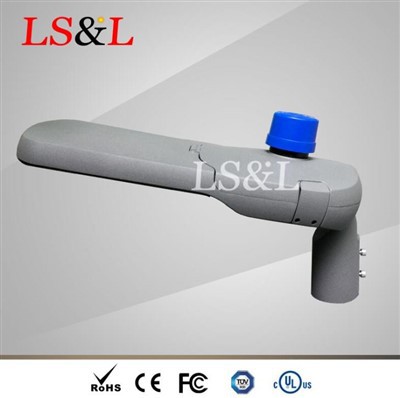
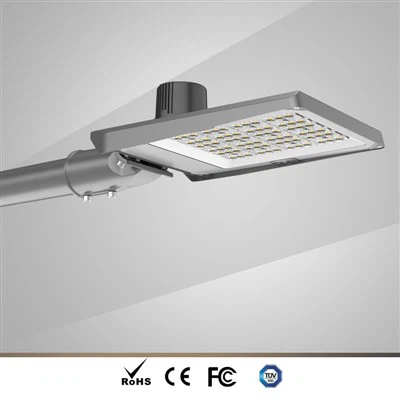
(1) Field device layer: provide a series of monitoring and management equipment required for lighting management, including single lamp controllers, gateways (centralized controllers), smart street lights, multi-function poles, etc.
(2) Network layer: The network layer provides network connection functions for intelligent lighting, of course, single lamp control, sensors on light poles, etc. can also provide local short-distance communication capabilities, such as RF or PLC communication, and remote connection through the wide city network communication capabilities (3/4G/fiber optic lights) on the gateway equipment (centralized controller).
(3)The platform supports the access of different terminal types, shields different interfaces and network differences of terminals for the service platform, and provides service capability exposure to the service platform.
(4) Intelligent lighting business service layer: realize various application functions of the system, such as lighting control subsystem, multi-functional street lamp pole subsystem, operation and maintenance management subsystem and other subsystem modules.
At this stage, the intelligent lighting construction mode adopts a discrete (vertical) architecture, and most of the intelligent lighting at this stage adopts a discrete (vertical) mode for construction, and the lighting management department builds its own management and service platform, and if it is necessary to dock the smart city management system, data exchange and sharing through API. Due to the continuous expansion of the connotation of smart lighting, the recent development includes not only the control of lighting business, but also the sensing and perception equipment integrated on the lamp or the light pole, especially the adoption of NB-1oT access mode, and the advantages of the unified IoT platform are becoming increasingly obvious. However, other devices mounted on multi-function poles, such as camera equipment and information release equipment, due to industry policies and data control lights, the related services of these devices still adopt a vertical model of discrete self-construction and self-management. In the future, it will inevitably move towards a unified platform architectureIn the future, smart lighting covers the comprehensive business of smart city supported by multi-functional poles, and it is necessary to carry out unified access management for smart city services, data management and sharing, and it is an inevitable choice to adopt the construction mode of a unified platform.
Unified IoT platform: The operator IoT platform is an open platform and ecological environment based on the characteristics of the Internet of Things technology and industry, which supports the rapid access and big data services of various sensors and intelligent hardware by adapting to various network environments and protocol types, and provides rich APTs and application templates to support the development of various industry applications and intelligent hardware, which can effectively reduce the cost of IoT application development and deployment, and meet the needs of device connection, protocol adaptation, data storage, and data storage in the field of Internet of Things. Platform-level service requirements such as data security and big data analysis. The platform solves common problems in application development such as multi-protocol adaptation, mass connection, data storage, device management, rule engine, event alarm, and resource management for developers, shortens the application development cycle, reduces application development costs, and promotes the innovation and upgrading of traditional enterprise applications. When an intelligent lighting terminal controller (such as a single lamp controller and sensor lamp) that supports narrowband Internet of Things (NB-1oT) is adopted, the lighting terminal controller needs to be connected to the platform because the connection of NB-1oT needs to be managed and optimized, and the lighting terminal controller communicates with the central management system (lighting management system) through the IoT platform.