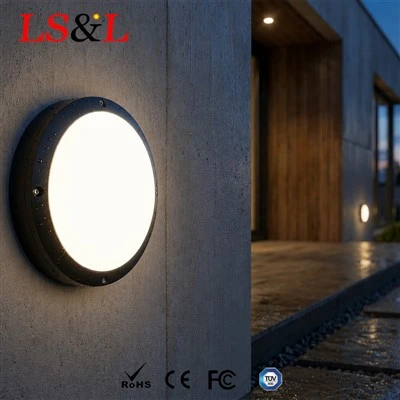
A poultry processing plant in Malaysia bought 240 units of a budget triproof LED light from a trader, based on a spec sheet that said IP65, 5 years warranty and 4000K. The lights came in, the installer clipped them to the ceiling in a day, and the line ran for six months. By month seven, thirty-two units had cloudy covers, four were leaking water, and one tripped the circuit breaker during a washdown shift. The trader answered the phone once, then stopped. The real failure was not the LED chips. It was the PC cover, the gasket and the driver, and none of those three is on the front-page spec.
If your plant runs a nightly caustic foam cycle, the triproof LED light you choose now is a six-month decision.
Why IP65 on the Box Is Not IP65 on Day 1,800
IP65 is a snapshot. It measures the fixture the day it leaves the factory, under a lab spray nozzle at 100 centimetres, with the cover clips fresh and the gasket compressed to its design gap. Six months of hot water, chlorine foam, forklift bumps and cleaning chemicals do not appear on that test.
A budget triproof LED light is sealed once at assembly. After that, the plastic ages, the gasket relaxes and the clips loosen. In a washdown room, the fixture cycles between 5 degrees at night and 35 degrees at noon. Every cycle pumps a little moist air in and out through the weakest seal. By winter, the inside of the cover has its own condensation.
A spec sheet that says IP65 is necessary but not sufficient. The next question the buyer should ask is how the fixture holds that rating after five years of pressure washing.
The PC Cover: Yellowing Is the First Symptom
The cover is the first thing you see fail. Budget triproof fixtures use recycled polycarbonate without UV stabilizer. Under 4000K light plus hot chlorine mist, the cover goes from clear to milky to amber in about eighteen months. The light output drops fifteen percent before anyone notices, because the human eye adapts slowly.
Better fixtures use virgin PC with UV inhibitors. A quick way to tell is to ask the factory for the cover material on the drawing: virgin PC, recycled PC, PMMA or PS. PMMA is brighter but cracks on impact. PS is the cheap one, yellowing in a year. A triproof LED light that lasts five years in a washdown room almost always ships in virgin PC with a 2mm minimum wall.
When a customer sends us a photo of a cloudy cover, the first question is not "what IP rating is it" but "what is the cover made of". The cover is the front line of any triproof LED light.
The Gasket: Silicone, EPDM, TPE
The gasket does the sealing work. Three materials show up on the drawing, and they do not age the same way.
Silicone handles heat and cleaning chemicals best. It stays soft to 150 degrees, shrugs off chlorine and does not crack under UV. It is also the most expensive choice.
EPDM is the factory standard. Good for water and mild chemicals, fine in cold storage, but it hardens under hot caustic foam and shrinks back from the cover in about three years.
TPE is the budget pick. It seals well on day one and contracts after a winter of temperature cycling. By spring, water is pooling inside the fixture.
When a customer tells us a triproof LED light failed in six months, we usually find a TPE gasket that was never specified. Ask for the gasket material on the PO, not just the IP rating.
The gasket is why two fixtures with the same IP65 label age at opposite rates. A triproof LED light with a TPE gasket will look fine on day one, and fail on the same day the silicone one still looks new.
The Driver: Where the Capacitor Lives
The LED chips in a triproof fixture are almost never the failure point. The driver is. In a sealed plastic housing, the driver has nowhere to dump heat. A budget driver uses an electrolytic capacitor rated at 105 degrees for 2,000 hours. Inside a sealed cover running at 65 degrees ambient, that capacitor lasts about one year.
For wet rooms, ask whether the driver is potted in epoxy or mounted in a ventilated chamber. A potted driver is heavier, but it does not breathe.
A sealed triproof LED light with an open-frame driver inside is a contradiction. If the driver can breathe, the whole fixture is breathing.
Quick Answers
Do I need triproof in a dry warehouse? No. A standard LED batten or panel light is fine. You are paying 40 percent extra for a seal you never use.
Do I need triproof above a washdown line? Yes. Ask for IP66, virgin PC cover, silicone gasket and a potted driver. IP65 is the minimum, not the target.
What about cold storage? Spec triproof with a heater inside the cover, or condensation will form on the lens every time the door opens.
Can I use a budget triproof outdoors under a covered car park? Yes, as long as the area is not pressure washed. The failure curve only starts when chemicals enter the picture.
Can I mix triproof and regular battens in the same warehouse? Yes. Put the triproof LED light only where water or chemicals reach, and use regular battens in dry aisles. This is how a good engineering spec cuts cost by 30 percent.
Before You Order
Write these five lines on your next PO, not just "IP65 triproof":
- PC cover material, virgin or recycled, with wall thickness in millimetres
- Gasket material, silicone, EPDM or TPE
- Driver type, potted epoxy or vented chamber, with capacitor rating
- Chemical exposure on site, chlorine, caustic foam, salt spray or none
- Warranty years, and who honors it when the trader disappears
A properly specced triproof LED light answers these five questions before the factory cuts the cover.
You can cross-check the waterproof category in our waterproof flood light guide, and read what IP44 versus IP65 really means in our bulkhead rating article. For a washdown plant, cold room or chemical yard, send the cleaning chemical list through our inquiry page and we will match the gasket and cover to the actual foam on site. When in doubt, contact our engineers; a triproof LED light that fails six months after install costs more than the unit you saved three dollars on. The right triproof LED light is the one you stop thinking about after the first washdown cycle.