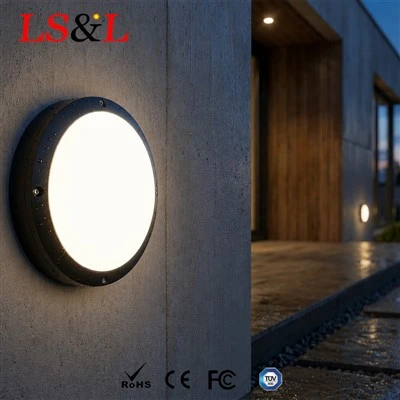
Many overseas factory clients wonder whether emergency lights are mandatory along escape routes. Fire codes vary widely from country to country, and non-compliant lighting will fail a site inspection. With years of export experience handling fire safety projects, we will discuss whether bulkhead lighting is required for factory escape routes.
Distinguish General Lighting from Emergency Lighting
Standard lights shut down immediately once power fails. Emergency variants come with backup batteries and activate automatically during mains failure to keep evacuation paths visible. The core function of escape lighting is to guide staff out safely during fires or power outages. Many projects adopt oval bulkhead lights as an integrated emergency unit. It delivers regular aisle lighting under normal conditions and evacuation lighting in emergencies, removing the need for separate wiring systems. Note that emergency readiness is more than adding a battery. Runtime and switch-over timing must comply with local fire safety standards.
Statutory Fire Code Requirements
Fire codes in most regions mandate emergency escape lighting for evacuation aisles and exit points in factories and warehouses. Exemptions apply to some small facilities and low-risk workshops, subject to local regulations. A common mistake for exporters is applying domestic standards instead of checking rules for the target market. For damp and dusty escape routes inside plants, many buyers select emergency-rated IP65 bulkhead lights. Its solid ingress protection guards the backup power unit against moisture and airborne contaminants.
Key Selection Tips for Emergency Fixtures
- Choose the correct emergency mode: maintained or non-maintained, to match local fire specifications.
- Verify battery runtime; most common standards require a minimum of 90 minutes of emergency operation.
- Units with automatic self-test features simplify routine maintenance and battery health checks.
- Keep mounting positions clear of obstructions to maintain continuous lighting with no dark gaps along evacuation paths.
Common Misconceptions
It is a critical mistake to treat sensor lights as emergency lighting. Microwave sensor fixtures cannot activate during power loss and are not approved for escape lighting. Some clients also run emergency lights as permanent main lighting, which accelerates battery degradation and reduces emergency runtime. Emergency batteries need regular charge-discharge cycles for proper upkeep.
Wrap-up
The requirement for emergency lights on factory escape routes depends entirely on local fire regulations. Mandatory rules almost always apply to high-risk facilities and long evacuation corridors, while small low-risk sites may qualify for exemptions. If emergency units are specified, battery performance, switch speed and ingress rating must meet relevant standards; regular fixtures cannot be used as substitutes.

If you are designing evacuation lighting and unsure of fire codes for your target market, or need a specification comparison between standard and emergency models, send your project details to us. We can support compliant product selection.