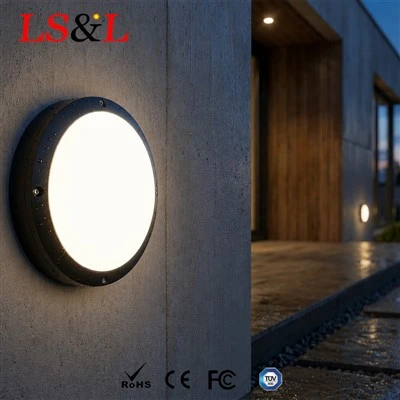
After more than a decade in lighting exports, factory clients often ask whether every industrial bulkhead needs emergency backup. Some fit emergency kits on all route lamps; others miss escape paths entirely. Here is which industrial bulkheads need emergency function-and which do not-based on field experience.
Not Every Bulkhead Needs Emergency Cover
Emergency lighting supports safe evacuation and essential tasks when power fails or during a fire. It is not meant to keep every support lamp in normal mode after a supply failure. Need is driven by point function, not by the bulkhead shape.
When an LED bulkhead lamp is used in a general plant room or on a non-escape route, daily lighting alone is often enough.
Escape Routes and Critical Nodes Usually Require It
If a plant link is an escape corridor, or the point sits on stairs, near exits, or at positions required by code, emergency lighting or emergency exit signage must be provided, with the required duration and changeover.
Bulkheads in these positions can use integral emergency modules or a central emergency system, following local codes and the fire design.
Write Production and Support Areas as Separate Specs
High-bay lighting over the main process floor and general task fill lighting follow a different logic from escape lighting. A bulkhead used only for edge fill on a line is not usually accepted as an emergency lamp; if it also lights an escape route, it must meet emergency requirements.
Emergency points in humid or dusty zones still need full protection-for example, a matching IP65 bulkhead light-so emergency function is not prioritised over environmental sealing.
Emergency Method: Local Battery or Central Supply
Self-contained battery emergency is flexible to install but needs regular testing and battery replacement. A central emergency supply is easier to maintain in one place but needs more system design and wiring. The specification should state maintained type, emergency duration, and test method.
When an LED bulkhead is the route standard, use two sub-types-"daily" and "emergency"-so the whole plant is neither over-specified nor left with gaps.
Practical Judgement
- Escape corridors, stairs, and exit-related points: emergency is usually required
- General plant rooms and non-escape support areas: emergency is often not mandatory
- Follow codes and the fire design; do not switch everything on or off by guesswork
- List, test, and log emergency points separately
Industrial LED bulkheads do not automatically need emergency backup. Escape and safety-related points do; general support lighting can stay on a daily specification. Clear function-based zoning keeps the scheme compliant and avoids unnecessary cost.
From years of working with factory and export clients, I know emergency is a safety item, not a sales add-on. Fit it where it is required; do not add it everywhere by default.

If you are confirming whether plant bulkheads need emergency function, share the role of the routes and the fire-design requirements. I can help identify which bulkhead light fits better and separate emergency points from daily ones.