Many factory clients want sensor lights for corridors to cut power costs, and microwave sensor versions are a popular option. Still, many buyers are unsure whether they fit factory conditions. Forklifts, metal racking and constant foot traffic make these sites far more complex than regular stairwells. Over years of export work, I have seen cases of false triggering and unstable sensitivity. Today we discuss whether led bulkhead light with microwave sensors works well for factory corridors.
Benefits of Microwave Sensors
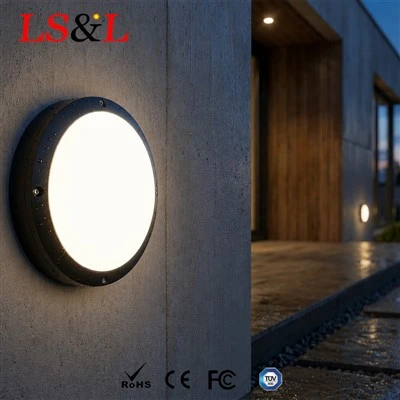
Microwave sensors detect movement via electromagnetic waves. They do not rely on ambient light and are less prone to interference from clothing or temperature changes, unlike PIR sensors. The light turns on automatically when workers or forklifts enter the detection zone and switches off after a set idle period, delivering solid energy savings for corridors with intermittent traffic. Many projects adopt round bulkhead light fitted with microwave sensors. Its compact shape suits bulk wall mounting along corridors.
Drawbacks and Risks to Watch For
Microwave signals pass through thin walls and plastic panels - this is where most problems arise. Metal shelving and machinery lining corridors reflect the waves, triggering false activation: a forklift moving in an adjacent workshop may switch on the corridor lights. Frequent false triggers defeat energy-saving goals and accelerate lumen depreciation, shortening fixture lifespan. Always carry out on-site testing before full installation in areas with heavy metal structures and vibrating equipment.
Suitable Locations
Ideal spots include long, separate corridors with solid walls and no large metal structures nearby, secondary aisles with intermittent foot traffic that do not require 24-hour lighting, and corridors separated from production zones by solid partitions to reduce signal cross-talk.
Not Recommended Locations
Avoid installing them in aisles next to metal workshops or dense racking areas, main routes with frequent fast-moving forklifts and continuously vibrating machinery, and inspection walkways needing steady lighting without flickering.
If microwave sensors are preferred for tricky sites, choose models with adjustable sensitivity and time delay settings. Some IP65 bulkhead light can be fitted with optional microwave sensor modules, suited for dusty or damp corridors while meeting industrial ingress protection standards.
On-site Commissioning Tips
- Start with low sensitivity instead of maximum settings to reduce false triggers from signal reflection.
- Set longer hold times for forklift routes according to traffic flow.
- Select fixtures with constant-on override mode, useful for maintenance and batch night inspections.
Wrap-up
Microwave sensor lights are not a universal fit for all factory corridors. They perform well in isolated aisles free from metal interference, but false triggers often happen near metal equipment and racks, undermining your investment. Evaluate site conditions carefully and test samples when necessary.

If you are designing sensor lighting for factory corridors and unsure whether microwave sensors fit your site, or want a comparison between microwave and PIR sensors, share your project details with us. We can recommend the right lighting solution.