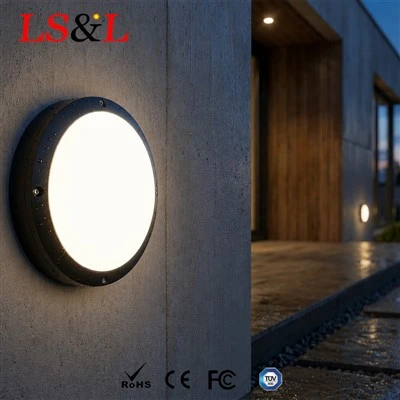
After more than a decade in lighting exports, factory clients often ask whether low-glare bulkheads really help people see better on walkways. Some assume brighter is always better, then find reflections on the floor so harsh that detail disappears. Here is whether low-glare bulkhead lighting can improve visibility on industrial walkways, based on field experience.
Harsh Brightness Is Not the Same as Clear Vision
A strong source with little shielding can glare on damp or smooth floors and briefly hide obstacles and steps. Visibility depends on contrast and comfort, not only on total brightness.
An LED bulkhead light with good diffusion often supports continuous walking vision better than the same power with exposed, harsh output.
How Low Glare Improves Walkway Visibility
Soft, even light reduces sharp bright–dark jumps, so the area ahead of the feet stays easier to adapt to. People pushing carts or carrying loads look up and down less often into a direct lamp beam.
An LED bulkhead lamp along the wall puts light on the floor and the wall base, which helps reveal pipe edges and level changes-not only a bright patch under the fitting.
What Delivers Low Glare in Design
Frosted or diffused covers, sensible mounting height and power, and aiming that avoids direct view of the source are the usual tools. Dark zones from wide spacing should be fixed with layout, not by raising single-lamp brightness without limit.
When selecting, do not read lumen figures alone-check whether the real appearance is comfortable or glaring.
Consider Environment and Maintenance Together
On dusty routes, keep covers clean or diffusion suffers and bright areas look busier. Damp zones still need matching protection so optical performance is not traded for sealing.
Industrial walkways put safe passage first: low glare and adequate illuminance should be met together, not treated as a choice of one or the other.
Short Conclusions
- Low glare reduces floor reflection and direct dazzle
- It supports continuous reading of walkway detail
- Diffusion, power, and height work together
- Even layout and routine cleaning are required
Low-glare bulkheads can improve visibility on industrial walkways because they improve comfort and continuity of vision-not only the brightness number on a datasheet. When route lighting is right, safety and efficiency both improve.
From years of working with factory and export clients, I know walkway lights should help people read the path, not create hot spots. Control glare and visibility rises naturally.

If you are improving plant walkway lighting, share corridor width, floor condition, and current glare issues. I can help identify which bulkhead light fits better and refine the scheme toward low glare.