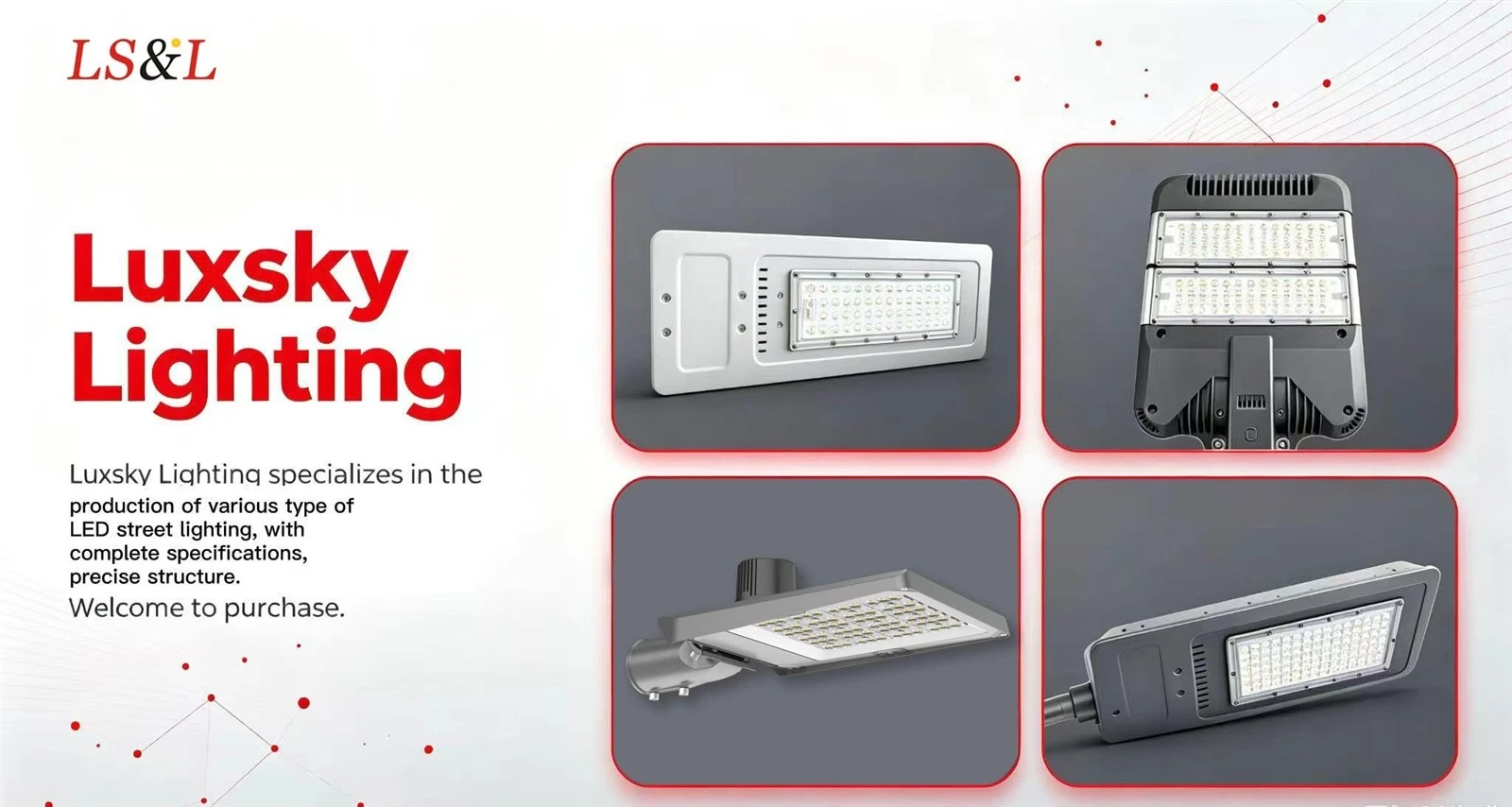
After years in the lighting export business, every time cold-region projects come up - Northern China, Russia, Scandinavia - I get asked the same thing: "Will it actually start at -30°C, or will it just freeze up?" It sounds like a simple question, but there's a lot more to it than most buyers realize. Let's dig in.
Where the Real Difficulty Lies
Most buyers assume the only risk in cold weather is dimmer output or a shorter lifespan. The real danger is actually the moment of startup. Electrolytic capacitors inside the LED driver are one of the components most vulnerable to cold. Once the temperature drops below -20°C, the electrolyte inside a standard capacitor thickens, causing unstable inrush current. At best you get flickering or delayed startup; at worst, the fixture simply fails to start - or the driver board gets damaged outright.
This is exactly why more and more tender documents for roadway LED lighting projects now list a "-30°C cold-start test report" as a hard qualification requirement, rather than simply accepting a spec sheet that says "operating range -40°C to +60°C" at face value.
Three Factors That Determine Cold-Start Performance
Driver component selection - Whether a fixture can survive a -30°C cold start comes down first to whether the electrolytic capacitors used are rated specifically for low temperatures; standard consumer-grade capacitors generally can't handle it.
Circuit protection design - A well-engineered driver includes soft-start circuitry to prevent inrush current from damaging components in cold conditions, and this is exactly the kind of thing that needs to be verified under a genuine Strict quality control LED engineering lighting system.
Housing sealing and moisture protection - Cold environments often bring condensation and ice formation. If the housing's sealing rating isn't sufficient, moisture can seep into the circuit board and cause startup failure too, which is why IP66/IP67 protection testing and low-temperature testing need to be validated together, not treated as separate checkboxes.
A Real Case Says More Than Any Spec Sheet
We once worked on a street lighting project in Kazakhstan, where winter temperatures can hit -35°C. The client initially tested samples from another supplier, and over three consecutive nights those fixtures failed to start or lit up with a noticeable delay - the project had to switch suppliers on an urgent basis. This kind of failure is actually fairly common on roadway LED lighting projects in northern countries and high-altitude regions, and at the root of it, the issue almost always traces back to inadequate driver and full-unit testing.
How We Handle This
At Luxsky Lighting, -30°C cold-start testing is a standard part of our product development process from day one. Every batch that leaves the factory goes through repeated power on/off cycles inside a low-temperature chamber to simulate real-world extreme cold conditions, confirming instant startup with zero delay and zero flicker. Our Smart outdoor light series also includes built-in thermal management and soft-start protection modules, so it can supply power smoothly even during sudden temperature drops, protecting both the driver board and chip lifespan.
If your project is located in a region with severe winters - Northeast China, Inner Mongolia, Russia, Central Asia - I'd strongly recommend asking your supplier for an actual cold-start test video or report, not just numbers on a spec sheet. Feel free to send us your project location and power specifications; we're happy to help evaluate the best fit for your local climate at no cost - no sales pressure, just honest technical advice.
Conclusion
Cold-start performance is one of the clearest indicators of a street light's true quality, and it's exactly the area where many suppliers look fine on paper but fail in the field. Luxsky Lighting stands behind Strict quality control and LED engineering lighting standards, and every product is validated under real cold-weather conditions to ensure stable startup and operation at -30°C and below. If you're sourcing a reliable LED street lighting supplier for a cold-climate project, reach out to us for test reports and a quote - let's make your project easier from the start.