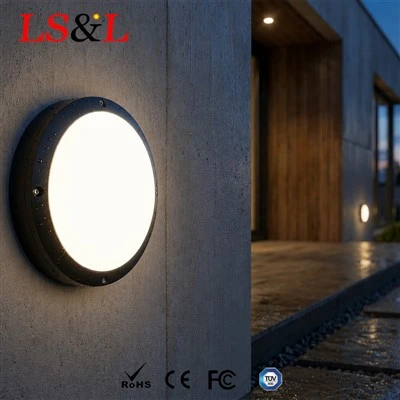
Many buyers compare fixtures only by wattage, assuming higher power means better efficiency. This common misconception leads to poor product selection, overspent budgets and insufficient lighting levels. After years in export sales, I've witnessed plenty of projects run into this issue. Today I will share practical ways to compare the efficiency of different led bulkhead light.
Core Metric: Luminous Efficacy (lm/W)
Luminous efficacy is the key benchmark for efficiency, showing how many lumens a fixture can produce per watt of power consumed. At the same wattage, a higher lm/W rating means lower energy consumption. Standard models usually reach 80–100 lm/W, while premium industrial versions hit 110–130 lm/W. Do not rely on peak values printed on labels. Focus on maintained efficacy under rated Ta temperature, as heat greatly reduces light output. For bulk orders of oval bulkhead light in warehouse and workshop corridors, check this figure carefully, since it directly shapes long-term electricity costs.
Do Not Overlook Driver Efficiency and Power Factor
Impressive chip efficacy does not guarantee high overall fixture efficiency; driver losses are frequently ignored. Low-quality drivers generate excess heat and waste energy. High-grade drivers typically achieve 90%+ efficiency paired with a strong power factor to cut reactive power waste. Grid compliance rules are strict for overseas projects. Even with top-tier chips, poor drivers drag down the overall energy performance. For outdoor projects, assess driver stability alongside total efficiency when selecting outdoor bulkhead light.
Measured Total Lumens vs Rated Specifications
Some suppliers quote theoretical chip lumens instead of total fixture output. Diffusers and housing structures absorb part of the light. Only tested initial lumens of the complete fixture carry real weight. Whenever possible, request third-party LM-80 or full-fixture test reports. Two fixtures both marked 40W can differ in actual light output by over 20%, so wattage alone is not a reliable comparison point. Also review lumen depreciation curves. Fixtures with high short-term efficiency but rapid light loss will dim significantly within a year.
Additional Factors That Affect Performance
Heat dissipation: Poor thermal management raises chip temperature, reduces efficacy and shortens service life. Aluminium housings usually outperform standard plastic ones.
Optical design: Diffusers and anti-glare louvers lose a small amount of light, yet well-engineered optics improve light utilisation and avoid wasted light.
Site conditions: For hot, dusty locations, choose models with a high temperature rating to sustain consistent efficiency over time.
Wrap-up
To compare fixture efficiency properly, start with total luminous efficacy, then verify driver efficiency, measured lumens and lumen depreciation. Wattage is merely a reference. One strong specification does not equal reliable overall performance; balance efficiency, ingress protection and lifespan.

If you have a shortlist of fixtures and need help cross-checking specifications, or want a comparison spreadsheet template, send us your site requirements. We will help you pick cost-effective options suited for your project.