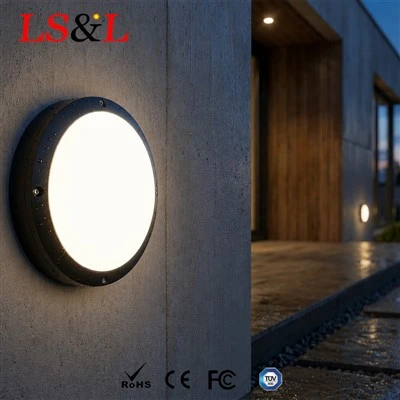
After more than a decade in lighting exports, project and factory clients often ask whether many bulkheads can sit under one lighting control system. Corridors and plant routes have high point counts, so fewer local switches and clearer zoning are attractive. Here is whether multi-lamp control on one system works-and how to keep it stable-based on field experience.
Yes-And It Is Already Common Practice
Same-circuit switching, floor-level master control, 0–10V group dimming, or a DALI bus all manage many lamps under one logic. What matters is that luminaire interfaces match the system and that groups follow real zones.
When an LED bulkhead light is used in bulk on long corridors, joining one system is what enables one-touch off, scheduled power reduction, or zone-based checks.
Simple Cases: Circuits and Switch Groups
With moderate point counts and on/off only, define circuits by floor or fire compartment and control them from the distribution board or smart switches. Cost stays low and maintenance stays clear.
Watch circuit capacity and cable size so too many luminaires are not stacked on one protective circuit.
When Dimming and Fine Zones Matter: 0–10V or DALI
For whole groups to dim together, 0–10V is enough; for lamp-level or small-group control with feedback, addressable options such as DALI are more suitable. When many lamps share the system, address maps and group tables should be ready before install.
When a round bulkhead light is the standard model, one driver interface type makes bulk connection easier and reduces mixed-protocol commissioning issues.
Treat Cross-Area and Outdoor Points Separately
Indoor routes and outdoor vestibules differ in environment. They can share a control platform, but circuits, protection, and emergency logic should stay separated. Outdoor points brought into the system still need outdoor-rated products-for example a matching outdoor bulkhead light-so communication is not prioritised over sealing.
Whether emergency bulkheads join the same system or are bypassed must follow local codes.
Practical Connection Points
- Decide if you need switching only, or dimming and scenes
- Standardise control interfaces; avoid mixed protocols
- Build a group table by floor and function
- Prove a sample circuit before full rollout
- Write emergency and general lighting control strategies separately
Multiple bulkheads can be controlled by one lighting system; that is standard practice for corridor and plant support lighting. Consistent interfaces and clear groups make the system usable and expandable.
From years of working with project and export clients, I know multi-lamp control is not hard-the hard part is leaving protocol and zoning undefined at the start. Plan before you pull cable and rework drops later.

If you are setting up central control for many bulkheads, share the point count and whether you need switching or dimming. I can help identify which bulkhead light fits better and straighten out how the system should connect.