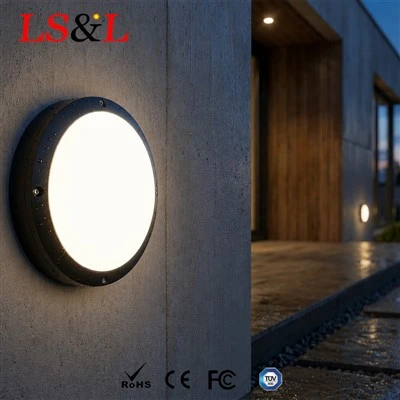
Many overseas industrial lighting projects overlook control options during technical handover. It is common to find the control setup incompatible with on-site wiring or management needs after delivery, leading to costly rework. With years of export experience, I will walk you through what control options you should specify for industrial LED bulkhead lights.
Basic On-Off Control
This is the simplest and most reliable option, operated via wall switches or circuit breakers. It works best for basic warehouses and simple aisles with tight budgets and no energy-saving or smart management requirements. It needs minimal wiring and is easy to maintain. Many small retrofit projects adopt round bulkhead lights for standard circuits, with straightforward installation and commissioning. The downside is fixed brightness without automatic adjustment for movement or daylight, leaving limited room for energy savings.
Sensor Control (Microwave / PIR)
Microwave sensors are widely used in industrial settings. Lights turn on upon detection and switch off after a hold delay, ideal for aisles and equipment rooms with intermittent traffic. PIR sensors are sensitive to temperature changes and better suited for indoor spaces with stable temperatures. Confirm adjustable sensitivity, hold time and daylight threshold during selection. For outdoor, dusty or humid locations, sensor versions need robust protection. Many buyers choose IP66 bulkhead lights with built-in sensors to combine ingress protection and motion control. Watch out for signal interference from metal structures and vibration to prevent false triggering.
0-10V Dimming Control
0-10V is a popular analog dimming solution with simple wiring and broad compatibility, suitable for workshops and inspection zones requiring grouped brightness adjustment. Light levels can be tuned for different shifts and work tasks. Compared with DALI, it costs less and demands lower technical skills from installers. Its main limitation is poor individual fixture feedback; separate status monitoring for each light is difficult.
DALI Digital Dimming Control
DALI is a standard digital dimming protocol supporting independent single-fixture control, group management and fault feedback. It fits large standardized factories and smart lighting systems with central maintenance. It can link with daylight sensors and timers for precise energy management. However, the full system requires gateways and dedicated bus cables, pushing up total costs and extending payback periods for small projects.
Timer Control
Timers suit factory aisles with regular working hours, switching lights on and off according to shift schedules. They are often combined with sensors or dimming to run lower base brightness during night shifts. This option lacks flexibility for zones with unpredictable visitor traffic.
Matching Guidance
There is no universal best control method; the right choice depends on project requirements. Evaluate the client's budget, wiring infrastructure and maintenance capacity alongside site operation patterns. Multiple control types can be mixed within one project for different zones. Investing in high-end smart controls blindly often wastes budget.
Wrap-up
When specifying control options for industrial fixtures, look beyond the lights themselves. Balance client management habits, budget and site conditions. Basic switching, motion sensors, 0-10V dimming, DALI and timers each have their proper use cases. Clear technical specifications in the purchase order avoid misunderstandings between buyer and supplier.

If you are preparing technical specifications and unsure which control type fits different areas, or need a comparison table for all control solutions, send over your project requirements. We can build a tailored selection list for you.