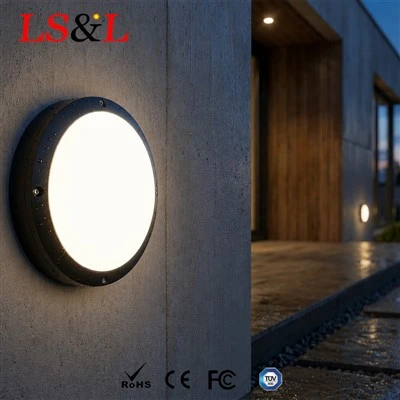
After more than a decade in lighting exports, factory project clients often ask how to write emergency bulkhead specifications for a manufacturing site. Too vague and supply misses the escape design; too scattered and purchasing becomes hard. Here is what a manufacturing-site emergency bulkhead specification should include, based on field experience.
Name Points by Escape Function First
List escape corridors, stairwells, positions near final exits, and plant-room exits that require emergency lighting on their own schedule, separate from general process routes. Whether a point needs emergency cover follows the fire design and codes-not a rule of "every bulkhead gets emergency."
An led bulkhead light should carry emergency type and duration only when it appears on the emergency point list, so the whole site's model range is not forced into emergency configurations.
State Maintained Type and Duration Clearly
Specify maintained or non-maintained operation and emergency duration. One project may use both types, but each must match the drawings and be separable in material codes.
At handover it must be possible to check by point-not only by a contract line that says "includes emergency."
Write Environmental Protection Alongside Emergency Function
Routes into workshops often see dust and humidity; zones near exterior doors also take weather. State IP rating, sealing, and install requirements for emergency points separately-for example an IP65 bulkhead light on damp sections, or a higher rating where the site demands it.
Do not stress battery duration alone while ignoring moisture in the housing that can cause failure at the critical moment.
Cover Testing, Indication, and Supply Scope
State function and duration test requirements, status indication, and whether units are self-contained or fed from a central emergency supply. Mounting-height principles and coordination with escape signage can sit in the notes.
If a round bulkhead light is the common route shape, require shared fixing dimensions for "daily" and "emergency" variants so spares and cut-outs stay consistent.
Manufacturing-Site Emergency Bulkhead Spec Checklist
- Emergency point schedule (separate from non-escape routes)
- Maintained / non-maintained type and emergency duration
- IP, sealing, and install requirements by zone
- Test method, log, and acceptance criteria
- Supply method (self-contained or central) and model separation
Specifying emergency bulkhead lighting for a manufacturing site rests on escape-function zoning, clear type and duration, and protection and testing that can be enforced. When the specification is checkable at handover, supply and site work align.
From years of working with factory and export clients, I know emergency specifications are for fire acceptance and routine testing-not for brochure language. Write to the point and the duration, and the document is complete.

If you are drafting emergency bulkhead specifications for a plant, share escape-route types and design duration. I can help identify which bulkhead light fits better and complete the clauses that matter.