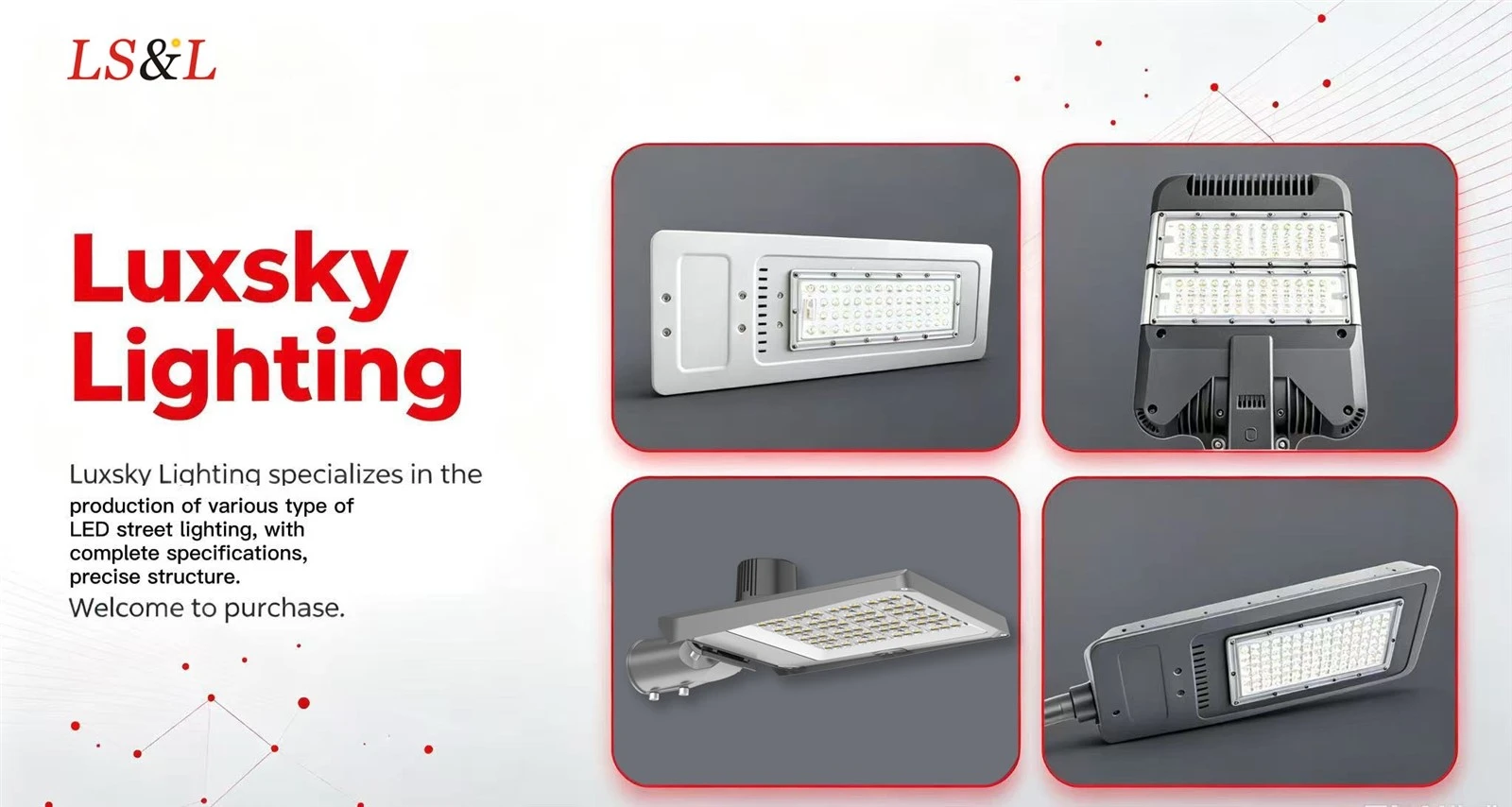
In roadway lighting projects, the light penetrability of luminaires in rainy and foggy weather directly determines nighttime driving safety and traffic efficiency. As a seasoned professional who has worked in the foreign trade lighting industry for many years, I have seen too many projects face complaints or even require reselection because of insufficient visibility in rain and fog. Today, drawing from real engineering experience, I will discuss the key points of luminaires' penetrability in rainy and foggy conditions, and how it closely relates to Strict quality control LED engineering lighting, Smart outdoor light, and roadway LED lighting.
Why Rainy and Foggy Weather Places Especially High Demands on Street Light Penetrability
In rainy and foggy weather, the air is filled with tiny water droplets and suspended particles. Light easily scatters and attenuates, causing reduced road surface illuminance and blurred outlines of objects. Ordinary street lights with insufficient brightness or improper spectral selection often leave drivers in a situation where they "can see the lights but cannot clearly see the road." Professional roadway led lighting must deliver adequate penetrability and clear road guidance while remaining energy-efficient.
Reliable penetrability is not achieved simply by increasing power. It requires a systematic approach covering light source spectrum, optical design, lumen maintenance of the complete fixture, and protection rating. This is precisely where Strict quality control LED engineering lighting demonstrates its value-from chip selection and driver stability to overall sealing, every step undergoes strict control so that stable output can be maintained under harsh weather conditions.
Key Design Points for Improving Rain and Fog Penetrability
Spectrum and Color Temperature Selection
Moderately warm color temperatures (such as 3000K–4000K) produce less scattering in rain and fog, resulting in better visual penetrability. High-quality roadway LED lighting optimizes the spectrum according to the project's climate zone, balancing color rendering with penetration performance.
High Lumen Maintenance and Precise Light Distribution
Luminaires must offer high initial lumen output and low lumen depreciation to ensure sufficient brightness in rain and fog even after long-term use. Combined with cut-off or asymmetric lenses that concentrate light onto the road surface and reduce ineffective scattering, this forms an important foundation for Smart outdoor lighting to maintain clear illumination in adverse weather.
High Protection and Thermal Stability
Rainy and foggy environments have high humidity, so luminaires must achieve IP65 or higher protection ratings to prevent moisture from entering and affecting optical performance. Excellent heat dissipation design also prevents accelerated lumen depreciation caused by high temperatures. Strict quality control LED engineering lighting is especially critical here, with complete testing and verification from materials to manufacturing processes.
Support from Intelligent Control
Modern Smart outdoor light systems can automatically increase brightness or adjust operating modes in rainy and foggy weather through sensing or remote dimming. This ensures safety while avoiding unnecessary energy consumption. Such "on-demand lighting" capability makes roadway LED lighting more reliable under complex climate conditions.
These designs must pass rigorous laboratory simulations and on-site verification, including lumen depreciation tests, waterproof tests, temperature-rise tests, and rain-fog environment simulations. Only products that truly pass a complete quality system can withstand long-term challenges in international projects.
Why Better Penetrability Leads to Longer-Term Customer Cooperation
In foreign trade negotiations, clients care most not about laboratory data, but about whether drivers can safely see the road in actual rainy and foggy conditions. A qualified roadway LED lighting solution must simultaneously deliver sufficient penetrating brightness, stable long-term performance, intelligent adjustment capability, and strict quality control. Many project failures occur because suppliers focus only on price and neglect real climate adaptability and quality systems. After delivery, performance in rain and fog proves inadequate, and rework costs far exceed any price difference. Companies that insist on Strict quality control in LED engineering lighting often secure more stable repeat orders and a stronger reputation.
The trend toward Smart outdoor lighting further reinforces this point: intelligence is not merely an on/off function. It integrates penetrability, energy savings, safety, and maintenance, keeping illumination in its optimal state under all weather conditions.
Conclusion
Our street lights consistently prioritize rain-and-fog penetrability, strict quality control, and engineering-grade reliability. The products have delivered stable performance and a solid reputation in actual roadway projects. If you are looking for reliable roadway LED lighting or Smart outdoor light solutions, please contact Luxsky Lighting directly and choose our professional LED street lights-for lighting that is truly safe, clear, and efficient.