With years of experience delivering lighting projects for overseas food processing plants, I often get asked how many tri-proof lights should be installed. Improper quantities lead to insufficient illuminance, uneven lighting or wasted budget, which directly affects production and compliance audits. Based on numerous completed projects, I will share core methods and logic to calculate the exact number of fixtures for food factories.
1. Calculate the base quantity by zone function and differentiate illuminance requirements for each workstation
Lighting requirements vary greatly across different zones in food plants. You cannot simply divide fixtures evenly by area. Warehouses and walkways or rough processing areas require lower illuminance, while sorting, inspection and packaging zones demand stricter standards for brightness and uniformity.
For basic auxiliary areas, weatherproof LED batten light can be sparsely arranged to meet simple lighting needs for passage and rough processing. This prevents over-specification and redundant costs, helping with budget planning for basic plant lighting.
2. Adjust fixture spacing and quantity according to workshop ceiling height
Ceiling height is a key factor affecting layout density. Lights deliver concentrated illumination in low-ceiling workshops, so fewer fixtures can meet standards. In high-ceiling facilities, more light is lost; insufficient fixtures will result in large dim blind spots.
For food workshops with a typical ceiling height of 3–5 meters, standard layout of LED tri proof lamp can hit target illuminance. Adjust spacing based on ceiling height to avoid glare caused by overlapping light beams and maintain even brightness across the whole workshop for continuous daily production.
3. Calculate spare fixture quantity based on site working conditions
Food workshops undergo frequent washdowns with high humidity and grease, creating harsher conditions than ordinary factories and slightly higher fixture wear rates. Many buyers only calculate the number of primary lights and ignore spares, which leads to lighting outages during maintenance and repairs.
The durable and compliant IP65 LED tri proof light is built for tough food plant environments. After finishing the main lighting layout, we recommend reserving 5%–10% extra fixtures as spares. Quick replacements minimize production downtime and keep the lighting system stable long-term.
4. Avoid common pitfalls: do not copy layout plans blindly
Many purchasers directly copy fixture quantity plans from other factories, ignoring differences in building structure, equipment layout and local acceptance standards. Blockages from machinery and dense production lines can stop standard fixture layouts from delivering expected lighting results.
Overseas food plant lighting audits require custom evaluation for each site. Layout plans must be tailored to actual site conditions, equipment obstructions and local illuminance codes. Accurate quantity calculation balances compliance, practicality and cost-effectiveness.
There is no fixed number for LED tri-proof lights in food processing plants. The total quantity should be calculated comprehensively by zone function, ceiling height, working conditions and audit requirements. Zoned layout plus a reasonable number of spare fixtures forms the optimal solution. A well-calculated fixture count meets production lighting and overseas audit requirements while optimizing procurement and maintenance costs.
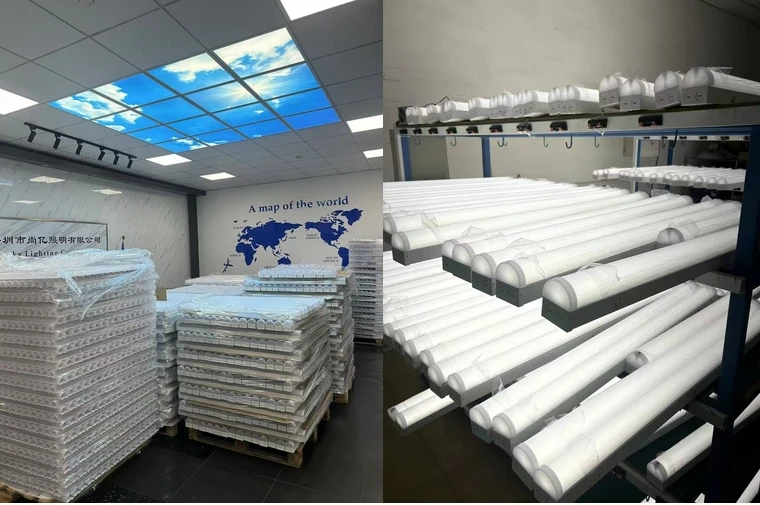
If you struggle to calculate the number of lights for your food workshop, or worry about insufficient illuminance from under-installation or wasted budget from over-purchasing, feel free to reach out. With rich hands-on experience in overseas food lighting projects, I can create accurate, compliant and cost-effective full lighting layout plans for you.