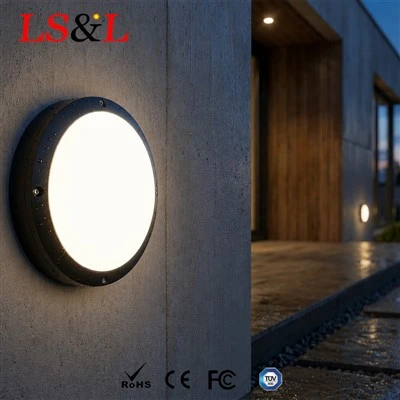
After more than a decade in lighting exports, factory clients often ask whether microwave or PIR sensors are better on industrial bulkheads. Both can switch lights on when someone approaches, but false triggers and obstruction behave very differently on a plant site. Here is a practical comparison for industrial use, based on field experience.
First Clarify What Each Sensor Detects
PIR (passive infrared) senses changes in body heat and needs a fairly clear view; areas behind columns or racking are easy to miss. Microwave actively sends and receives a signal and is more sensitive to movement-it may even react through thin doors or light partitions.
When planning an led bulkhead lamp with sensing on plant routes, decide whether the corridor is straight, shared with vehicles, or full of metal structure before choosing the sensor type.
PIR: Usually Fewer False Triggers on Pedestrian Routes
On link corridors used mainly by people, with limited heat interference, PIR is often steadier and less sensitive to activity behind doors or in adjacent zones-which supports real energy saving.
Aim detectors toward the walkway and keep them clear of cable trays and extinguisher cabinets. Set sensitivity for normal walking speed so the light is not still off until someone is already close.
Microwave: Quicker Coverage, but Watch Vehicles and Reflections
On long runs with columns or light obstruction, microwave can detect walking earlier. Where forklifts, pipework, and metal walls are present, reflections can cause false-on events, so sensitivity must be reduced to "just enough."
When an led bulkhead includes a microwave module, test after install by both walking and driving so factory defaults are not left over-sensitive on site.
A Steady Choice for Industrial Scenes
- Mostly pedestrian traffic, many doorways, few heat sources: lean toward PIR
- Long straight runs, more obstruction, need earlier switch-on: consider microwave with strict commissioning
- Mixed people and vehicles: use microwave with caution, or mix types by zone
- Outdoor vestibules: match protection as well as sensor type; specify as an outdoor bulkhead light where exposure demands it
Neither option is always better; the fit depends on plant layout and traffic. On escape routes that require a minimum illuminance, either sensor type should work with a low continuous level-not simple full-off.
Commissioning Matters More Than the Label
Mounting height, aiming, hold time, and photocell threshold all change the result. After install, test on real routes: continuous light at walking pace, false triggers from vehicles, and whether hold time is long enough.
For industrial bulkheads, microwave versus PIR comes down to controlled false triggers and reliable switch-on when needed. PIR is usually steadier and easier to live with; microwave suits long runs that need more sensitive coverage, but only with careful set-up.
From years of working with factory and export clients, I know sensor choice is not about which technology sounds more advanced-it is about fewer false-on events and real energy saving. On the right route both work; on the wrong one either will draw complaints.

If you are choosing a sensor type for plant bulkheads, share corridor shape, mixed traffic conditions, and main issues. I can help identify which bulkhead light fits better and whether microwave or PIR is the stronger option.