Eight Hundred Thousand Yuan and Twenty Days
The people's government of Yaoshan Town in Pucheng County, Shaanxi Province, has issued a competitive negotiation notice for the 2026 Yaoshan Town public lighting project. The budget is set at RMB 800,000, approximately USD 112,000, and completion is required within 20 days of contract signing. Procurement documents are distributed through the Shaanxi government procurement integrated management platform, and the notice carries the standard policy preference for small and medium enterprises.
Township schemes like this are the steady background volume of the Chinese road lighting market. They are small, they are frequent, and they are decided quickly. A twenty-day window from contract to completion leaves no room for a redesign, which means the specification has to be right the first time.
Getting Wattage and Spacing Right the First Time
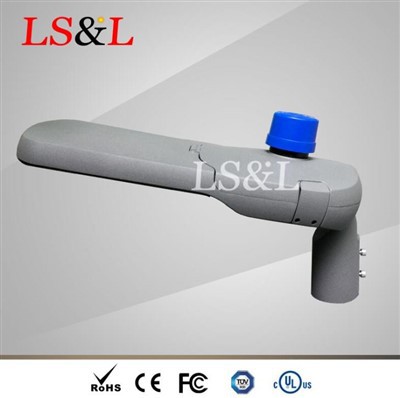
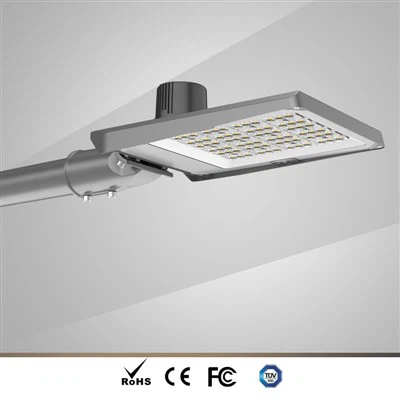
The most common error in township work is fitting one wattage everywhere. A village lane on a 6 metre pole rarely needs more than a 50W LED Street Light, which delivers roughly 6,000 to 7,500 lumens and comfortably meets the lower residential road classes. Fitting 100 or 150 watts on the same column produces glare, wasted energy, and complaints from residents whose windows face the road.
Where the scheme joins a county road or crosses a market square, a 100W LED Street Light on an 8 to 10 metre column is the correct tool. The discipline is to calculate maintained illuminance and uniformity for each road type first and let wattage follow, rather than ordering a single model for the whole package.
Delivery lead time deserves equal attention under a twenty-day clause. Confirming stock or production capacity before the bid is submitted is what separates a completed project from a penalty clause.
Luxsky Product Perspective
We supply both classes from one platform, which is what makes mixed township schemes economical. The same drivers, optics, and mounting interfaces run across lamp posts and main-road columns, so the village electrician inherits one fixture family rather than three.
Pole reuse is worth checking before the luminaire schedule is finalised. Township schemes frequently inherit columns of mixed age, and a bracket that fits one generation will not fit the next. Confirming spigot diameters during the site survey costs an afternoon and prevents the single most common cause of installation delay on a twenty-day programme.