A Telecom Operator Inside the Winning Consortium
Guizhou's public resource trading platform published the winning bid for the Xifeng county public lighting intelligent energy-saving retrofit at 20.5999 million yuan. The successful consortium pairs Guizhou Yunliangyuan Construction with China Unicom's Guizhou industrial internet arm, scoring 97.14 in evaluation. The composition of that consortium is the interesting part of the award.
When a telecom operator joins a lighting retrofit bid, the project is no longer only about fixtures. It is about connectivity, data hosting, and a managed service that runs for years after the last pole is commissioned. For county-level authorities, that partnership solves the problem of who operates the platform once the contractor demobilises.
What the Energy-Saving Case Has to Prove
County-wide retrofits are usually justified on a payback calculation, and that calculation is only as good as its baseline. The two numbers that decide it are the existing fixture wattage including ballast losses, and the realistic dimming profile for the network after midnight. Overstating either produces a business case that fails audit.
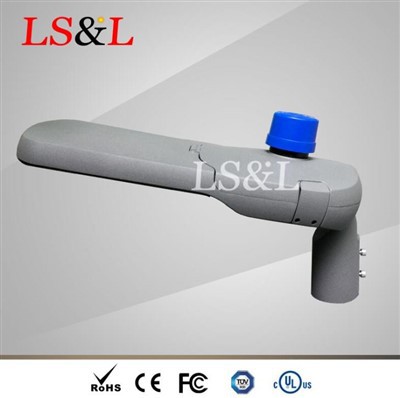
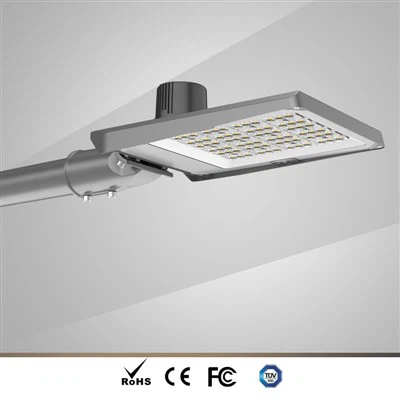
On the equipment side, a typical county scheme replaces 250W sodium fixtures with a 100W LED Street Light on the existing columns, which is roughly a 60 percent reduction before any dimming is applied. Where columns are taller or roads wider, the next class up is specified, and where the existing poles are sound, retrofitting them usually beats replacement on cost.
The control layer then adds a second saving by trimming output through the small hours, which is why the connectivity partner matters as much as the luminaire.
Luxsky Product Perspective
We build luminaires for this kind of programme with the control interface treated as a serviceable part. Our Smart outdoor light range uses standard socket interfaces so a failed node is replaced without touching the luminaire, and drivers accept 0-10V and DALI dimming as specified by the platform vendor.
Measurement and verification is where county programmes most often stumble. The contract needs a defined baseline, an agreed measurement method, and a stated correction for weather and traffic growth, because without them the savings figure is arguable from the first quarter. Providers who volunteer that methodology tend to be the ones whose numbers survive audit.

If you are assembling a bid for a county programme, send us the existing inventory and pole schedule. We will return a replacement schedule, energy baseline, and photometric files for each road class so the financial case and the technical submission describe the same project.